

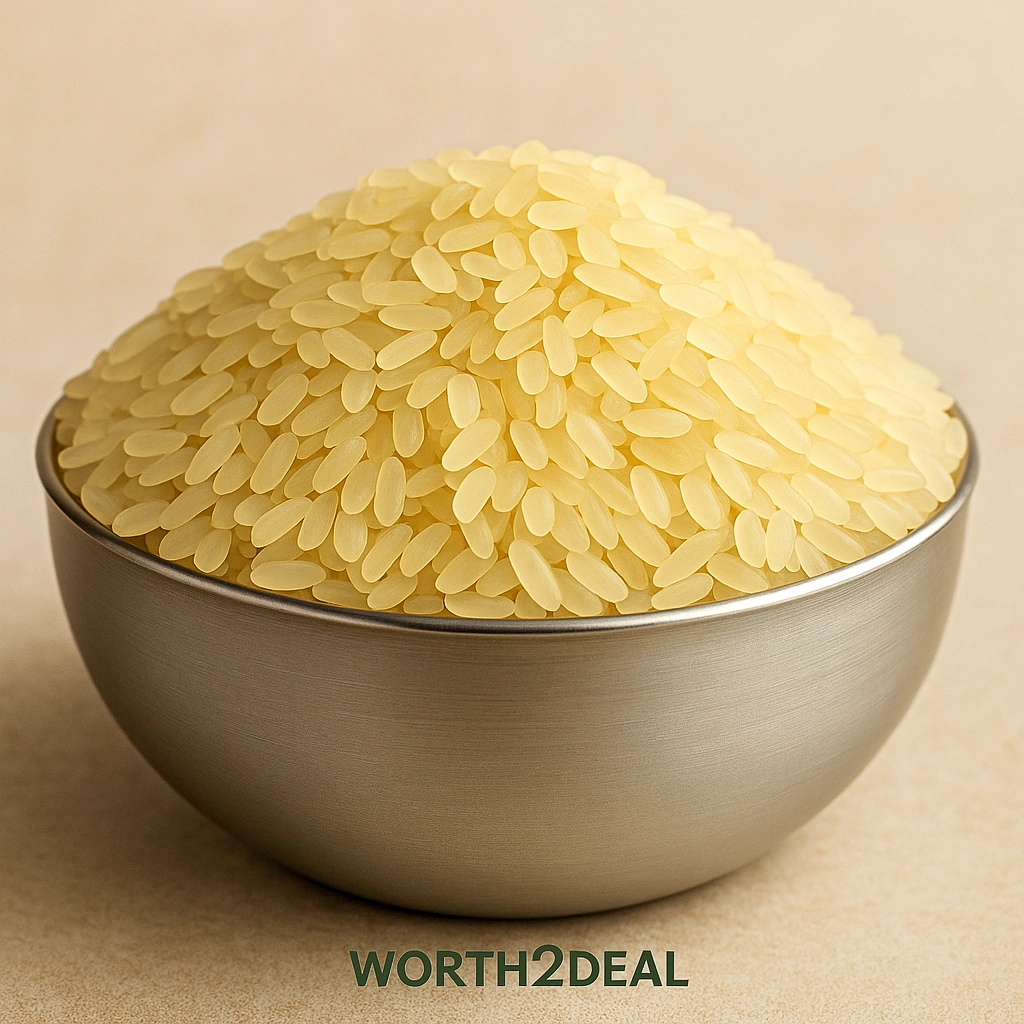


Buy Worth2Deal Kerala Parboiled Jaya Rice Online — Palakkad White Rice
Available Offer
Share :
Kerala Jaya Rice is a traditional long-grain white parboiled rice variety cultivated in Palakkad district — naturally parboiled to lock in nutrients, gluten-free, light on digestion, and the everyday rice of choice for millions of Kerala households who want the familiar soft texture and mild flavour of white rice with better nutritional value than raw milled rice.
What Is Jaya Rice — Kerala's Most Reliable Everyday White Rice
Jaya rice is one of Kerala's most widely cultivated and consumed white rice varieties — a long-grain, medium-slender rice developed specifically for the paddy-growing conditions of Palakkad's fertile plains. It takes its name from the Hindi word for victory — reflecting its status as a high-yielding, consistent variety that became a staple across Kerala and Tamil Nadu from the 1970s onwards.
Unlike the aromatic varieties like Jeerakasala or the unpolished red varieties like Matta rice, Jaya rice is Kerala's everyday workhorse — the rice for kanji, for lunch, for curd rice, for idli and dosa batter, for sambar rice, for lemon rice. Its mild flavour and predictable cooking behaviour make it the most forgiving and versatile rice in Kerala's kitchen.
Worth2Deal sources Jaya rice directly from Palakkad — the rice bowl of Kerala — where Palakkad's flat, irrigated plains and black cotton soil produce consistently high-quality long-grain rice. Packed fresh in Malappuram and delivered free to your door anywhere in India.
Why Parboiled — What Natural Parboiling Does to Jaya Rice
Worth2Deal Kerala Jaya Rice is naturally parboiled — a traditional processing method where the rice is soaked, steamed, and dried before milling. Kerala Jaya Rice is a traditional long-grain , This process, practised in Kerala for generations, does three important things:
First — parboiling drives the vitamins and minerals from the outer bran layer deep into the grain before the bran is removed during milling. The result is a white rice that retains significantly more B vitamins, iron, and minerals than raw milled white rice — even after the bran is polished off.
Second — parboiling gelatinises the starch inside each grain, giving Jaya rice its characteristic firm, separate, non-sticky texture after cooking. Each grain holds its shape — not clumping or turning mushy — making it ideal for serving with gravies, curries, and sambar where grain integrity matters.
Third — the parboiling process naturally improves digestibility. The gelatinised starch is easier for the digestive system to break down, making parboiled Jaya rice a gentler option than raw white rice for children, elderly family members, and people with sensitive digestion.
Jaya Rice vs Other Kerala Rice Varieties — Which Should You Choose
The most common question buyers ask is how Jaya rice compares to the other rice varieties in Worth2Deal's range. Here is the honest answer:
Jaya rice is Kerala's everyday white rice — mild in flavour, consistent in cooking, soft in texture, light on the stomach. It is the choice for families who want a familiar white rice with reliable cooking behaviour and better nutrition than raw milled rice.
Matta rice (Vadi Matta or Unda Matta) is Kerala's traditional red rice — earthy in flavour, higher in fibre and bran, with a firmer, chewier texture. It is the health-conscious choice for those making a deliberate switch away from white rice.
Ponni rice is a medium-grain white rice from Tamil Nadu — softer and stickier than Jaya when cooked, preferred for idli, dosa batter, and softer rice preparations.
Jeerakasala Khaima is an aromatic short-grain rice from Wayanad — used exclusively for biryani and ghee rice, not for everyday cooking.
If you are looking for the rice that most closely replicates the everyday Kerala household rice experience — the rice your grandparents ate for lunch with sambar and thoran — Jaya rice is that rice.
| Feature | Jaya Rice | Matta Rice | Ponni Rice |
|---|---|---|---|
| Colour | White | Deep reddish-brown | White |
| Grain | Long, slender | Long or round | Medium |
| Texture cooked | Firm, separate, soft | Firm, chewy | Soft, slightly sticky |
| Flavour | Mild, neutral | Earthy, nutty | Mild, neutral |
| Best for | Daily meals, kanji | Health-conscious eating | Idli, dosa, soft rice |
| Origin | Palakkad, Kerala | Palakkad, Kerala | Tamil Nadu |
What You Can Cook with Worth2Deal Kerala Jaya Rice
Jaya rice's neutral flavour and non-sticky cooked texture make it one of the most versatile rice varieties in South Indian cooking:
- Everyday Kerala lunch— rice with sambar, fish curry, avial, thoran, rasam, dal, curd, and pickles. The firm separate grains absorb curry well without turning soft or dissolving.
- Kanji (rice porridge) — Jaya rice kanji with small onions, green chillies, and uppu manga is a classic Kerala breakfast and recovery food.
- Curd rice — the firm grain holds up well in curd rice, not turning mushy even after mixing.
- Lemon rice and tamarind rice — the separate grain structure is ideal for mixed rice preparations.
- Idli and dosa batter — mix 2 cups Jaya rice with 1 cup urad dal for good idli and dosa batter. Jaya rice gives a slightly firmer idli than Ponni — a preference in many Kerala households.
- Fried rice — the non-sticky cooked grain makes it excellent for Kerala-style fried rice and egg rice.
- Lunch box— Jaya rice holds its texture after cooling, making it one of the best rice varieties for packed lunches — it does not clump or harden the way some raw white rice varieties do.
- Rice for children and elderly — the light digestibility of parboiled Jaya rice makes it the preferred everyday rice for young children and senior family members in Kerala households.
How to Cook Worth2Deal Kerala Jaya Rice
Rinse and Soak: Rinse 3 to 4 times until water runs clear. Soak for 15 to 20 minutes — optional but speeds up cooking slightly.
Pressure Cooker (Recommended):1 cup Jaya rice to 2 cups water. Cook on medium flame for 3 to 4 whistles. Natural pressure release. Open and fluff gently with a fork. The grains should be fully cooked, separate, and firm — not mushy.
Open Vessel: 1 cup rice to 4 cups water in a large pot. Bring to rolling boil. Add soaked rice. Cook on medium flame for 15 to 18 minutes stirring occasionally. Drain through colander. Draining excess water produces lighter, separate grains preferred for curry meals.
Rice Cooker: Use the standard white rice setting. 1 cup rice to 1.75 cups water.
Jaya rice cooks relatively quickly — do not overcook or the grains will begin to split and lose their firm texture.
Storage Instructions
Store in a cool, dry, airtight container away from direct sunlight and moisture. Add 2 to 3 dried cloves or a bay leaf inside the container to naturally prevent infestation — the traditional Kerala household method. Best consumed within 6 to 8 months of purchase for optimal flavour and freshness. Do not store near strong-smelling items — rice absorbs odours easily.
Also from Worth2Deal Kerala Rice
For Kerala's traditional unpolished red rice, see our Organic Vadi Matta Rice — GI Certified Palakkadan Red Rice. For authentic Thalassery biryani rice, see our Wayanad Jeerakasala Khaima Rice. For our full Kerala rice collection, explore Kerala Rice & Brown Rice Varieties.
Product Details
Net Weight: 2kg | 5kg | 10kg Variety: Jaya — Long Grain Parboiled White Rice Origin: Palakkad district, Kerala Processing: Natural parboiling — steam parboiled before milling Texture: Firm, separate, non-sticky after cooking Flavour: Mild, neutral — classic Kerala white rice Gluten Free: Yes Artificial Colour: None Preservatives: None Shelf Life: 12 months from date of packing (unopened, stored correctly) Storage: Cool, dry, airtight container Best Used For: Daily Kerala meals, kanji, curd rice, lemon rice, idli dosa batter Packed by: Worth2Deal, 7/330 Shanti Nagar, Valayamkulam, Kokkur Post, Malappuram District, Kerala 679591 FSSAI Licence No.: 21317233000044 Contact: worth2deal.com@gmail.com | +91 9846294242
FAQ — Kerala Parboiled Jaya Rice
Q1. What is Jaya rice — what makes it different from other white rice?
Kerala Jaya rice is a long-grain white parboiled rice variety grown in Palakkad district — naturally parboiled to lock in nutrients before milling, gluten-free, non-sticky after cooking, and the most widely consumed everyday white rice across Kerala households. Unlike raw milled white rice, parboiled Jaya retains more B vitamins and minerals. Unlike red Matta rice, it has a mild neutral flavour and soft white grain. It is Kerala's everyday workhorse rice. FSSAI Lic. No.: 21317233000044.
Q2. Where can I buy Kerala Jaya rice online with free delivery?
Worth2Deal sources Kerala parboiled Jaya rice directly from Palakkad farms — available in 2kg, 5kg, and 10kg with free pan-India delivery. We deliver to Bangalore, Mumbai, Delhi, Hyderabad, Chennai, Pune, and all major cities. Cash on Delivery available at checkout for eligible pin codes. FSSAI Lic. No.: 21317233000044.
Q3. What is the difference between Jaya rice and Matta rice?
Jaya rice is a white parboiled long-grain rice — mild in flavour, firm and separate after cooking, light on digestion, the classic everyday Kerala white rice. Matta rice (red rice) is unpolished, earthy in flavour, higher in fibre and bran, with a chewier texture. Jaya rice is the choice for families who want familiar white rice with better nutrition than raw milled rice. Matta rice is the choice for those making a deliberate health switch away from white rice entirely.
Q4. What is the difference between Jaya rice and Ponni rice?
Both are white rice varieties but they differ in grain and texture. Jaya is a long-grain rice from Palakkad with a firm, separate, non-sticky cooked texture — ideal for curry meals and kanji. Ponni is a medium-grain rice from Tamil Nadu that cooks softer and slightly stickier — preferred for idli, dosa batter, and softer rice preparations. For everyday Kerala lunch with sambar and curries, Jaya rice produces the better result.
Q5. Why is parboiled Jaya rice better than raw white rice?
Parboiling drives B vitamins and minerals from the outer bran into the grain before milling — so even after polishing, parboiled Jaya retains more nutrients than raw milled white rice. Parboiling also gelatinises the starch inside each grain, giving it a firmer, separate, non-sticky texture after cooking and making it easier to digest. Worth2Deal Jaya rice is naturally steam-parboiled using traditional Kerala processing methods — no chemical treatment.
Q6. How do I cook Kerala Jaya rice in a pressure cooker?
Rinse 3 to 4 times and optionally soak for 15 to 20 minutes. Use 1 cup rice to 2 cups water. Cook on medium flame for 3 to 4 whistles. Natural pressure release — do not open early. Fluff gently with a fork. The grains should be fully cooked, firm, and separate. If grains are splitting or mushy — reduce water to 1.75 cups next time. Jaya rice cooks faster than red rice varieties — do not overcook.
Q7. Can I use Jaya rice for idli and dosa batter?
Yes — mix 2 cups Worth2Deal Jaya rice with 1 cup urad dal for good idli and dosa batter. Jaya rice produces a slightly firmer idli than Ponni rice — a texture many Kerala households prefer. Soak the rice and dal separately for 4 to 6 hours before grinding. Ferment for 8 to 12 hours. The batter ferments well with Jaya rice due to its starch content.
Q8. Is Jaya rice good for children and elderly people?
Yes — the natural parboiling process makes Jaya rice easier to digest than raw white rice, making it particularly suitable for young children and elderly family members. Its mild, neutral flavour is well accepted by picky eaters. It is also naturally gluten-free. For children under 1 year, consult your paediatrician before introducing any solid food including rice.
Q9. Is Kerala Jaya rice gluten free?
Yes — Worth2Deal Kerala Parboiled Jaya Rice is naturally gluten-free. It contains no wheat, barley, or rye. No artificial colour, preservatives, or added flavour. Safe for people with gluten intolerance or coeliac disease. It is processed in a facility that handles only rice and rice products.
Q10. How should I store Jaya rice to keep it fresh?
Store in a cool, dry, airtight container away from direct sunlight and moisture. Add 2 to 3 dried cloves or a bay leaf to naturally prevent infestation — the traditional Kerala household method. Best consumed within 6 to 8 months of purchase for optimal freshness. Do not store near strong-smelling items — rice absorbs odours easily.
Q11. Does Worth2Deal deliver Jaya rice across India — can I get 5kg or 10kg packs?
Yes — Worth2Deal ships Kerala Parboiled Jaya Rice pan-India in 2kg, 5kg, and 10kg packs with free delivery. We regularly fulfil orders to Bangalore, Mumbai, Delhi, Hyderabad, Chennai, Pune, Kolkata, and all major metro and Tier 2 cities. Delivery takes 4 to 7 working days. Cash on Delivery is available at checkout for eligible pin codes.
Q12. Will everyday white rice like Jaya rice be replaced by red rice and millets in Indian households?
Not in the near future — and probably not completely even long term. Red rice and millets are growing in popularity among health-conscious urban consumers but everyday white rice remains the staple for the vast majority of Indian households, especially in South India. What is changing is the preference for better-processed white rice — parboiled varieties like Jaya that retain more nutrients than raw milled rice — over generic supermarket white rice. Worth2Deal's Jaya rice represents this middle ground — familiar white rice with meaningfully better nutritional value than commodity white rice.
Worth2Deal Kerala Parboiled Jaya Rice is sourced from Palakkad farms — naturally steam-parboiled, long-grain, gluten-free, non-sticky after cooking. The everyday white rice Kerala has trusted for generations, packed fresh in Malappuram and delivered free anywhere in India. Order now — 2kg, 5kg, or 10kg.
Order Worth2Deal Kerala Jaya Rice Now — Free Pan-India Delivery →