

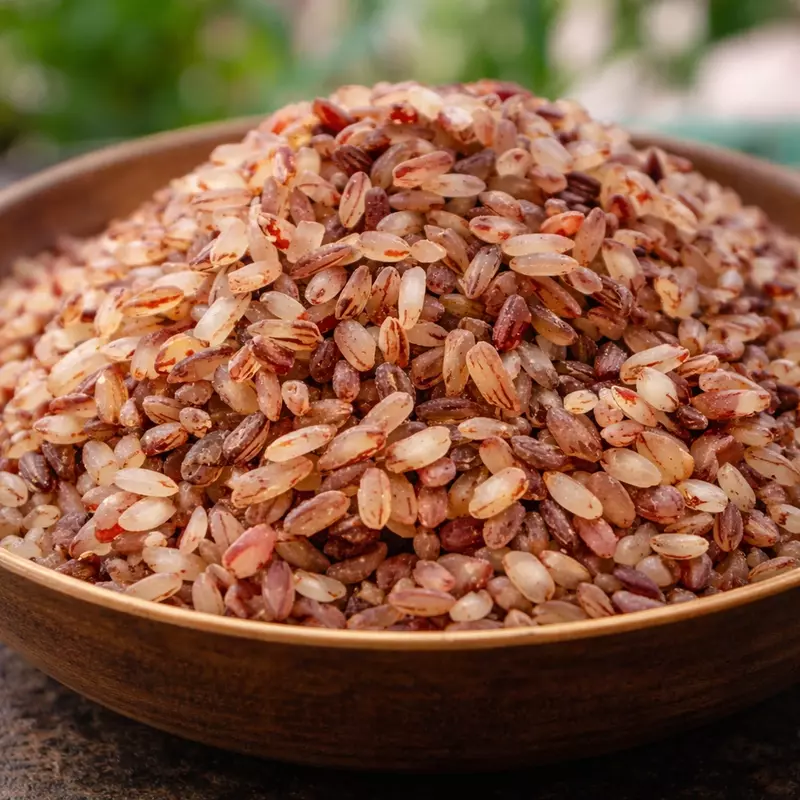


Buy Worth2Deal Organic Vadi Matta Rice Online — GI-Certified Palakkadan Low-GI Red Rice
Available Offer
Share :
Worth2Deal Organic Vadi Matta Rice is a GI-certified, organically grown Palakkadan long-grain red rice from Palakkad, Kerala, with a glycaemic index of approximately 55 — making it a low-GI, diabetic-friendly, high-fibre daily rice for health-conscious families across India. Cultivated in Palakkad's black cotton soil without synthetic pesticides, traditionally parboiled with 80% natural bran intact, it is the authentic nadan Kerala rice trusted by Malayali families in Bengaluru, Delhi, Mumbai, Chennai, Kolkata, Hyderabad, Pune, Kochi, Thiruvanantapuram, and cities across India. Available in 1 kg, 2 kg, 5 kg, and 10 kg with free pan-India delivery. FSSAI Lic. No.: 21317233000044.
Rice Is Not Just Food in Kerala — It Is Memory
Ask anyone who grew up in a Kerala home what single smell takes them back instantly. Not a curry. Not a spice. The smell of Matta rice cooking — that deep, earthy, nutty aroma filling every corner of the house, meaning lunch is almost ready. It is one of the most specific and irreplaceable sensory memories of a Kerala childhood, and no Basmati, no polished white rice, no import can recreate it.
Worth2Deal Organic Vadi Matta Rice is that rice. The same bold, reddish-brown long grain from the black cotton soil of Palakkad. The same parboiling tradition that drives nutrients deep into the grain before the husk is removed. The same earthy flavour that makes every curry taste exactly right beside it. Sourced organically — pesticide-free, GI-certified, 80% bran intact — and delivered to your door anywhere in India with free shipping.
What Is Vadi Matta Rice — The Full Story
Vadi Matta Rice — known across India as Palakkadan Matta, Rose Matta Rice, Kerala Red Rice, and Rosematta — is an indigenous long-grain rice variety cultivated exclusively in the black cotton soil of Palakkad, Kerala. The word Vadi refers to the grain's distinctive elongated, oblong shape — longer and bolder than the shorter, rounder Unda Matta variety.
The history of this rice goes back centuries. Palakkadan Matta was the preferred grain of the Chola and Chera royal families — chosen for its unique flavour and superior nutritional profile. It earned Geographical Indication certification from the Government of India's GI Registry in 2007, legally tying the variety to Palakkad's specific geography, soil, and farming tradition. Worth2Deal sources Organic Vadi Matta Rice directly from Palakkad farms — the only place in India where the authentic GI-certified variety grows on that specific black cotton clay soil.
For Malayali Families Living Outside Kerala — This Is Your Rice
If you grew up in Kerala and now live in Bengaluru, Delhi, Mumbai, Kolkata, Chennai, Hyderabad, Pune, Ahmedabad, Nagpur, Chandigarh, Jaipur, Surat, Lucknow, Bhopal, Indore, Noida, Mysuru, Coimbatore, Thiruvanantapuram, or Kochi — you already know what you are looking for. The matta rice available in most local supermarkets outside Kerala is double-boiled, over-polished, and in some cases artificially coloured. It looks red. It is not what you grew up eating.
Worth2Deal ships authentic GI-certified Organic Vadi Matta Rice — grown in Palakkad, packed in Malabar, Kerala — directly to Malayali families across every major Indian city. Not a commercial substitute. The real, unpolished, 80%-bran-intact, pesticide-free nadan matta rice that smells exactly like your grandmother's kitchen when it cooks. Free delivery. 1 kg trial pack or 10 kg bulk — no minimum order.
Why Organic Matters — What Pesticide-Free Farming Does to Your Rice
Worth2Deal Organic Vadi Matta Rice is cultivated without synthetic pesticides or chemical fertilisers — using traditional organic farming methods that Kerala's paddy farmers have practised for generations.
The bran layer that makes Vadi Matta nutritious is the same layer that absorbs pesticide residues in conventionally farmed rice. When you eat unpolished red rice with bran intact — as Vadi Matta is meant to be eaten — you consume whatever was on that bran. Organic farming eliminates this entirely. Organic cultivation also preserves the microbial life in Palakkad's black cotton soil — the same soil biology that gives the grain its distinctive earthy flavour. Every batch of Worth2Deal Organic Vadi Matta is sourced from farms following certified organic practices under Kerala's agricultural standards.
The Nutrition in Every Grain
Worth2Deal Organic Vadi Matta retains 80% of its natural bran layer — the outer coating that polished white rice removes entirely during milling. The key nutrients in each serving:
Dietary Fibre: Approximately 2 g per serving — completely absent in polished white rice. Slows digestion, creates satiety, supports bowel health, and feeds beneficial gut bacteria.
Glycaemic Index approximately 55: Significantly lower than white rice at 73. Blood glucose rises slowly and steadily rather than spiking — clinically meaningful for anyone managing blood sugar day to day. Consult your doctor before using this as a substitute for any prescribed dietary plan.
Magnesium: Approximately 42 mg per half-cup serving — supports heart function, bone density, blood pressure, and insulin sensitivity. Low magnesium is directly linked to insulin resistance.
B Vitamins: B1, B2, B3, and B6 — retained through parboiling. Vitamin B6 supports serotonin production, regulating mood, sleep, and digestion.
Anthocyanin Antioxidants: The deep reddish-brown colour of Vadi Matta comes from anthocyanins — the same antioxidant class found in blueberries. Pigmented rice varieties have significantly higher antioxidant capacity than white rice.
Calcium and Zinc: For bone health and immune function — both absent in polished white rice.
Naturally Gluten-Free: Safe for people with gluten intolerance or coeliac disease.
Note: While organic vadi matta rice has a lower glycaemic index than white rice and may support blood sugar management, people with diabetes should manage portion sizes and consult a healthcare provider before making dietary changes.
Vadi Matta Rice for Diabetes — What a GI of 55 Means in Your Kitchen
For anyone managing Type 2 diabetes, prediabetes, or blood sugar through diet, the glycaemic index number matters — but so does context. A GI of approximately 55 means blood glucose rises more slowly and steadily after a meal compared to white rice at GI 73. When paired with protein — fish curry, dal, paneer, eggs — and vegetables, the effective glycaemic load drops further, making Vadi Matta one of the most practical whole-grain rice swaps available in South Indian cooking.
Vadi Matta is low in sodium, naturally gluten-free, and free from the blood-glucose-spiking starch profile of polished white rice. Worth2Deal Organic Vadi Matta is the daily rice of choice for health-conscious families, diabetes wellness communities, and nutrition-aware households across India from Bengaluru to Delhi to Mumbai to Chennai to Kolkata. FSSAI Lic. No.: 21317233000044.
Note: People with diabetes should consult their healthcare provider before making changes to their diet.
High-Fibre Rice for Weight Management — And Why Malabar Knew This Centuries Before It Became a Trend
Dietary fibre is the most important factor separating whole-grain rice like Vadi Matta from polished white rice — and it works in two ways relevant to weight management. First, fibre slows digestion, extending the time before hunger returns. Second, the resistant starch in parboiled matta rice feeds beneficial gut bacteria, supporting the gut microbiome that nutritional science links directly to metabolism and weight regulation.
Malabar's Ayurvedic tradition has documented the use of matta rice kanji — rice water porridge — as a healing food for centuries, consumed during illness, postpartum recovery, and fasting. Worth2Deal Organic Vadi Matta is unprocessed food as medicine: grown without chemicals, milled minimally, delivered to your door with nothing added and nothing removed.
Vadi Matta vs Unda Matta — Which Should You Choose?
Both are GI-certified Palakkadan varieties grown in Palakkad's black cotton soil, but they differ in meaningful ways.
Vadi Matta has a long, elongated grain — firmer cooked texture, earthier flavour, better for daily curries and rice bowls. It holds its shape after cooking and absorbs curry well without turning mushy. Unda Matta is short and round — softer, stickier texture, traditionally preferred for Onam Sadya, kanji porridge, and festive Kerala meals.
If you are replacing white rice for daily cooking, Vadi Matta is the better starting point. If you want softer texture for kanji or sadya, choose Unda Matta. Both are available from Worth2Deal — see our Palakkadan Unda Matta Rice if the round-grain variety suits you better.
Vadi Matta vs Brown Rice — A Comparison Worth Making
Many customers come from brown rice and want to understand the difference. Both are whole-grain options, but they are not identical.
Vadi Matta is traditionally parboiled — a process that drives B-vitamins and minerals deep into the grain before dehulling, making nutrients more bioavailable and the bran more digestible than raw brown rice. Vadi Matta also contains anthocyanins from the red pericarp — natural antioxidants not found in standard brown rice. In taste, brown rice is milder and nuttier; Vadi Matta is earthier and bolder, pairing specifically well with South Indian gravies. For those who want maximum bran retention at 90%, Worth2Deal also offers Organic Parboiled Brown Rice.
Beyond the Kerala Plate — Uses for Modern Kitchens
Traditional Kerala meals: The classic pairing — rice with sambar, fish curry, avial, thoran, rasam, dal, curd, and pickle. The grain absorbs curry far better than Basmati.
Grain bowls: Firm, separate texture holds up in modern grain bowls with roasted vegetables, grilled protein, or tahini-based sauces.
Weight management: High fibre creates lasting satiety — smaller portions satisfy longer. One of the most practical white rice replacement options available.
Diabetes-friendly daily cooking: Pair with protein-rich curries — fish, lentils, paneer — to further slow glucose absorption.
Idli and Dosa batter: Mix 1 cup Vadi Matta with 2 cups idli rice and 1 cup urad dal for nutritionally superior batter. Ferments slightly faster — use within 48 hours.
Porridge and Kanji: Kerala's traditional recovery food — generous water, salt, small onions, green chillies, and pickle. The standard healing food across Malabar and Palakkad households.
Payasam: Vadi Matta rice payasam in coconut milk with jaggery is a festival staple no other rice variety can replicate.
Kanji vellam — rice water: The starchy cooking water is used warm as a digestive drink, applied to hair for shine, and used as a gentle face wash — a traditional Ayurvedic practice documented in Kerala texts.
How to Cook Worth2Deal Organic Vadi Matta Rice
Rinse 4–5 times until water runs clear. Soak for a minimum of 30 minutes — up to 2 hours for faster, more even cooking.
Pressure Cooker (Recommended)
Open Vessel — Traditional Malabar Method
1 cup rice to 8 cups water in a large pot. Full rolling boil, then add soaked rice. Medium flame, 25–30 minutes, stirring occasionally. Drain through colander. Draining excess starchy water produces lighter, separate grains.
Instant Pot
1 cup rice to 2.5 cups water. High pressure 12 minutes. Natural release 10 minutes, then open valve. Drain remaining water. Vadi Matta takes slightly longer than white rice due to bran retention — this is expected and normal. Undercooking produces hard, chewy grains.
Storage Instructions
Store in a cool, dry, airtight container away from direct sunlight and moisture. Add 2–3 dried cloves or a bay leaf inside the container to naturally prevent infestation — the traditional Malabar household method. Best consumed within 6–8 months for optimal flavour. Do not store near strong-smelling items — unpolished rice absorbs odours more readily than polished rice.
Also from Worth2Deal Kerala Rice
Product Details
Net Weight: 1 kg | 2 kg | 5 kg | 10 kg Variety: Organic Vadi Matta — GI Certified Palakkadan Long-Grain Red Rice Bran Retention: 80% — unpolished Glycaemic Index: Approximately 55 — Low GI Cultivation: Organic — pesticide-free, no chemical fertilisers Processing: Traditional parboiling Colour: Deep reddish-brown — natural anthocyanin pigmentation Gluten Free: Yes Artificial Colour: None Preservatives: None Shelf Life: 12 months from date of packing — unopened, stored correctly Sourced from: Palakkad farms, Kerala Packed by: Worth2Deal, 7/330 A, Shanthi Nagar, Kokkur, Malappuram, Kerala — 679591 FSSAI Licence No.: 21317233000044 Contact: worth2deal.com@gmail.com | +91 9846294242
FAQ -Worth2Deal Organic Vadi Matta Rice
Q1. What is organic vadi matta rice and how is it different from regular commercial matta rice?
Organic Vadi Matta Rice is a GI-certified Palakkadan long-grain red rice grown in Palakkad's black cotton soil without synthetic pesticides — traditionally parboiled with 80% of the natural bran layer retained. Vadi refers to the elongated grain shape that distinguishes it from the shorter round Unda Matta variety. The difference from regular commercial matta rice is significant: most supermarket matta is conventionally farmed, double-boiled, and heavily polished — reducing the GI benefit and stripping bran nutrition. Organic Vadi Matta retains the full anthocyanin pigmentation, dietary fibre, magnesium, and B-vitamins that make Kerala red rice nutritionally distinct. Worth2Deal sources directly from Palakkad farms with no middlemen. FSSAI Lic. No.: 21317233000044.
Q2. Is vadi matta rice good for diabetics — what is its glycaemic index?
Yes. The glycaemic index of vadi matta rice is approximately 55, which classifies it as a low-to-medium GI food — significantly lower than polished white rice at 73. For people managing Type 2 diabetes, prediabetes, or blood sugar through diet, this means blood glucose rises more slowly and steadily after eating. The high dietary fibre content of approximately 2 g per serving and the parboiling process both contribute to slower carbohydrate absorption. When paired with protein-rich curries — fish, dal, eggs, or paneer — the effective glycaemic load drops further. Worth2Deal Organic Vadi Matta is naturally gluten-free, free from artificial additives, and non-GMO. People with diabetes should consult their healthcare provider before changing their diet. FSSAI Lic. No.: 21317233000044.
Q3. What is the difference between vadi matta and rose matta rice — are they the same?
Yes — they are the same rice family. Vadi Matta, Rose Matta, Rosematta, Palakkadan Matta, Kerala Red Rice, and kuthari are all names used across different regions of India for GI-certified Palakkadan red rice. Vadi specifically identifies the long-grain elongated variety. Rose Matta is a trade name popularised by commercial Kerala brands. Worth2Deal uses Vadi Matta to indicate the authentic long-grain variety sourced directly from Palakkad farms — not a commercial blend, not artificially coloured. FSSAI Lic. No.: 21317233000044.
Q4. Is vadi matta rice better than brown rice for everyday South Indian cooking?
Both are whole-grain options with distinct advantages. Vadi Matta is traditionally parboiled — a process that drives B-vitamins and minerals deep into the grain before milling, making nutrients more bioavailable than raw brown rice. It also contains anthocyanins from the red pericarp — natural antioxidants absent in standard brown rice. In flavour and cooking performance, Vadi Matta is far better suited to South Indian cuisine — its bold earthy flavour pairs specifically well with sambar, fish curry, rasam, and avial. Brown rice is milder and suits stir-fries and grain bowls better. For maximum bran retention at 90%, Worth2Deal also offers Organic Parboiled Brown Rice — see our Kerala Rice collection for both options.
Q5. I want to switch from white rice to something healthier — is vadi matta rice actually worth it?
It is not a trend — it is a traditional grain that predates white rice consumption in Kerala by centuries. The nutritional case is direct: Vadi Matta has approximately 2 g dietary fibre per serving versus near-zero in white rice, a GI of approximately 55 versus 73 for white rice, and meaningful amounts of magnesium, B vitamins, and anthocyanin antioxidants that polished white rice entirely lacks. The honest adjustment: the taste and texture take a week of cooking to get used to if you have eaten polished white rice your whole life. Vadi Matta is earthier, chewier, and more filling — which is the point. Most people who switch report they cannot go back. Pressure cooker cooking works best — 5 to 7 whistles with 3.5 to 4 cups water per cup rice, 30-minute soak before cooking.
Q6. Where can I buy authentic organic vadi matta rice online in Bengaluru, Delhi, or Mumbai — most brands seem to be just coloured white rice?
This is a real and common problem. Most commercially sold matta rice — including some major Kerala brands — is double-boiled, heavily polished, and in some cases artificially coloured. The test: wash the rice 3 to 4 times. Authentic unpolished organic vadi matta will show natural colour running off from bran powder on the surface, not artificial dye. The cooked grain should open fully and show the characteristic red eye at the centre. Worth2Deal ships authentic GI-certified Organic Vadi Matta Rice directly from Palakkad farms to Bengaluru, Delhi, Mumbai, Chennai, Kolkata, Hyderabad, Pune, Kochi, Thiruvanantapuram, Coimbatore, Ahmedabad, Chandigarh, Jaipur, Nagpur, Lucknow, Surat, Bhopal, Indore, Mysuru, Noida, and all major Indian cities — with free delivery on all orders. FSSAI Lic. No.: 21317233000044.
Q7. What size should I order first — 1 kg, 2 kg, 5 kg, or 10 kg?
If you have never cooked vadi matta rice before, start with the 1 kg pack — it cooks 4 to 5 meals for a family of four and gives you enough experience to judge the texture and flavour before committing to bulk. If you are a Kerala family using matta rice as your daily rice, the 5 kg or 10 kg is significantly more cost-effective per kilogram. All sizes ship free pan-India from our facility in Malabar, Kerala, and arrive within 4 to 7 working days. Storage note: unpolished rice with bran intact has a shorter shelf life than polished rice — store in an airtight container and consume within 6 to 8 months of delivery for peak flavour.
Q8. How do I cook Worth2Deal Organic Vadi Matta Rice in a pressure cooker?
Rinse 4 to 5 times until water runs clear. Soak for at least 30 minutes — up to 2 hours for softer results. Pressure cooker ratio: 1 cup rice to 3.5 to 4 cups water, medium flame, 5 to 7 whistles. Allow natural pressure release — do not open early. Drain any excess water. The grain is done when the central red eye has fully opened. For Instant Pot: 1 cup to 2.5 cups water, high pressure 12 minutes, natural release 10 minutes. The extra cooking time compared to white rice is normal and expected — the bran layer takes longer to hydrate. Undercooking produces hard, chewy grains. Soaking is the single most effective step you can take to improve results.
Q9. How is Worth2Deal Organic Vadi Matta different from Double Horse or Nirapara matta rice?
The key difference is organic cultivation and bran retention. Worth2Deal Organic Vadi Matta is grown without synthetic pesticides — which matters because the bran layer that provides the nutritional benefit is also the layer that absorbs chemical residues in conventionally farmed rice. Most branded matta from Double Horse, Nirapara, and similar labels is conventionally farmed and more heavily processed. Worth2Deal sources GI-certified Palakkadan Matta directly from Palakkad farms with 80% bran retained, packed in Malabar with no artificial colouring, no added preservatives, and no middlemen. Dispatched within 1 to 2 business days. FSSAI Lic. No.: 21317233000044.
Q10. My vadi matta rice arrived — what is the best way to store it long term?
Store in a cool, dry, airtight container away from direct sunlight and humidity. The traditional Malabar preservation method: add 2 to 3 dried cloves or a bay leaf inside the container — both are natural insect repellents effective against weevils. For orders over 5 kg, divide into smaller airtight containers immediately to minimise oxygen exposure each time you open one. Best consumed within 6 to 8 months for peak flavour. Unpolished rice with bran intact absorbs odours more readily than polished rice — store away from spices, onions, and strong-smelling pantry items. Refrigerator storage works well in warm and humid climates during monsoon season.
Q11. Does Worth2Deal deliver organic vadi matta rice to Bengaluru, Delhi, Mumbai, Chennai, Kolkata, and other cities across India?
Yes — free pan-India delivery on all orders with no minimum order value. Worth2Deal regularly ships organic vadi matta rice to Bengaluru, Delhi, Mumbai, Kolkata, Chennai, Hyderabad, Pune, Kochi, Thiruvanantapuram, Coimbatore, Ahmedabad, Nagpur, Chandigarh, Jaipur, Surat, Lucknow, Bhopal, Indore, Mysuru, and Noida — and to thousands of pin codes across Tier 2 and Tier 3 cities in Kerala, Karnataka, Tamil Nadu, Maharashtra, Andhra Pradesh, Telangana, Rajasthan, Punjab, Uttar Pradesh, and beyond. Delivery time is typically 4 to 7 working days. Cash on Delivery is available at checkout for eligible pin codes. Orders are dispatched within 1 to 2 business days from our Malabar facility.
Q12. Is organic Kerala matta rice becoming a mainstream choice in Indian health and wellness culture?
It is moving rapidly in that direction. Searches for low GI rice India, diabetic friendly rice, and Kerala red rice online have grown consistently over the past three years on both Google and Amazon India — driven by India's diabetes and lifestyle disease epidemic and growing urban awareness of traditional grain nutrition. What brown rice did for urban breakfast tables a decade ago, matta rice is doing for the lunch plate — with a stronger flavour story, deeper nutritional profile, and the cultural resonance of a GI-certified traditional Indian variety. Worth2Deal has been at the centre of this shift since 2017, bringing authentic Palakkadan organic matta rice directly to health-conscious families, Malayali diaspora communities, and nutrition-aware households across India.
Worth2Deal
7/330 A, Shanthi Nagar, Kokkur, Malappuram, Kerala — 679591
FSSAI Licence No.: 21317233000044
Email: worth2deal.com@gmail.com
Phone: +91 9846294242
Website: www.worth2deal.com
Order Worth2Deal Organic Vadi Matta Rice Now — Free Pan-India Delivery →