

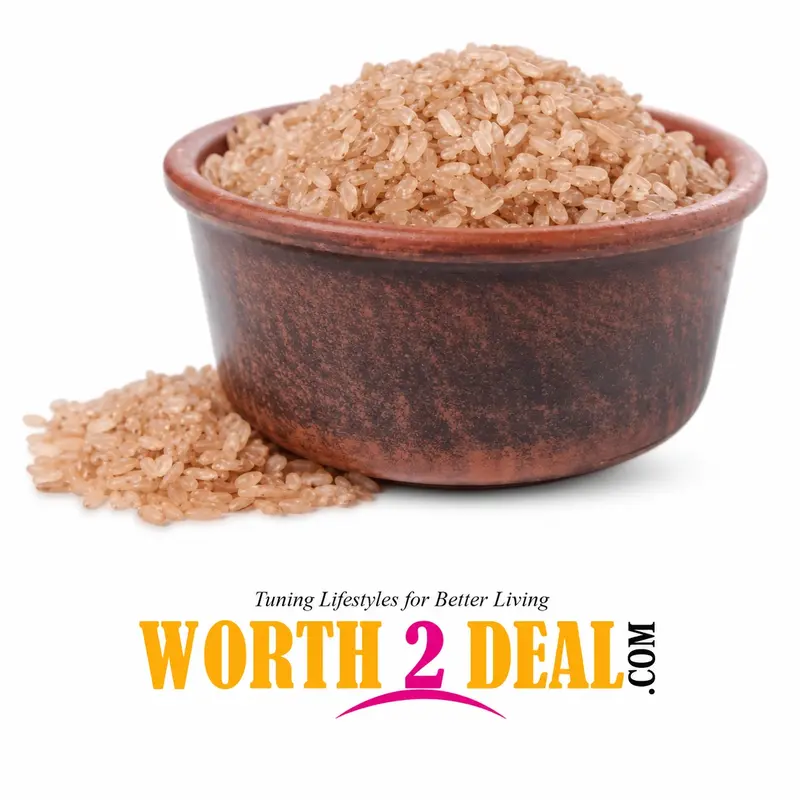


Buy Worth2Deal Palakkadan Unda Matta Rice Online — GI Certified Double Boiled Kerala Red Rice, 2kg, 5kg and 10kg
Worth2Deal Palakkadan Unda Matta Rice is GI-certified traditional double-boiled Kerala red rice — the round-grain variety sourced from Palakkad's black cotton soil, partially milled with natural bran retained, lower glycaemic index than white rice, and suitable for everyday use by diabetics and health-conscious families. Softer texture than Long Matta, ideal for Onam Sadya, Kerala kanji, payasam, and daily South Indian meals. Sourced directly from Palakkad farms and packed in Malappuram by Worth2Deal. Free pan-India delivery. Available in 2kg, 5kg, and 10kg. FSSAI Lic. No.: 21317233000044.
Available Offer
Share :
Worth2Deal Palakkadan Unda Matta Rice is GI-certified traditional double-boiled Kerala red rice — the round, plump-grained variety that has been at the centre of Kerala's table for generations. Sourced directly from Palakkad's distinctive black cotton soil, partially milled with natural bran retained, and packed by Worth2Deal in Malappuram without middlemen. Free pan-India delivery in 2kg, 5kg, and 10kg.
The Round Grain That Belongs at Every Kerala Table
There is a rice that Kerala reaches for when the occasion matters. Not for ordinary weekday lunches — though it works perfectly there too — but for the meals that carry meaning. The Onam Sadya spread on banana leaf. The morning kanji that heals everything. The payasam that ends a feast. The comfort food that a sick child actually wants to eat.That rice is Unda Matta.
Worth2Deal Palakkadan Unda Matta Rice is the round-grain variety of GI-certified Palakkadan Matta — sourced directly from the black cotton soil of Palakkad, Kerala. Double boiled using traditional parboiling methods, partially milled with natural bran retained — it has the soft, yielding texture and gentle earthy flavour that makes it Kerala's most trusted festival and everyday rice. Packed in Malappuram, Kerala. No middlemen. No substitutions. FSSAI Lic. No.: 21317233000044.
What Is Unda Matta Rice — The Science Behind the Name
Unda means round in Malayalam. The grain's characteristic short, plump, round shape is not a processing outcome — it is in the grain's genetic structure itself, a product of Palakkad's unique regar soil, rainfall pattern, and altitude. Regar soil — also called black cotton soil — is known for its high moisture retention and mineral richness. These specific soil conditions, combined with traditional cultivation practices passed down across generations of Palakkad farming families, produce the characteristic round grain that defines authentic Unda Matta.
The Horticulture International Journal's comprehensive nutrition review on Nendran banana cultivars (published 2023) specifically identifies Nendran as growing within the same Palakkad ecosystem — confirming that Kerala's most GI-certified food varieties share the same agricultural heritage and unique soil conditions that cannot be replicated anywhere else.
Worth2Deal sources Unda Matta directly from Palakkad farms. We verify the GI certification at sourcing and do not blend Unda Matta with cheaper non-GI red rice varieties — a common commercial practice that buyers cannot detect by appearance alone.
Double Boiling — Why This Processing Method Changes Everything
Most rice varieties sold in India are either single-boiled (parboiled once) or raw-milled. Palakkadan Unda Matta is double-boiled — the paddy passes through two cycles of parboiling before milling.
This matters nutritionally because the first parboiling cycle causes the outer husk to expand and crack. During the second parboiling cycle, heat and moisture penetrate deeper into the grain — driving B vitamins, particularly thiamine (B1), riboflavin (B2), and niacin (B3), from the outer bran layer deep into the starchy endosperm before the husk is removed. The result is a rice grain that retains significantly more B vitamins through cooking than single-boiled or raw-milled varieties, even after the partial milling step removes the outer husk.
The double-boiling process also gelatinises the starch structure differently — producing a distinctly softer, more yielding cooked grain that absorbs the flavours of the accompanying curries more completely. This is why double-boiled Unda Matta behaves differently in a sadya setting from single-boiled Long Matta — the grain opens gently rather than holding its shape firmly.
The Nutritional Advantage of Partially Milled Unda Matta
Worth2Deal Palakkadan Unda Matta is partially milled — the milling process removes the outer husk but retains a natural proportion of the bran layer. This single decision produces a cascade of nutritional advantages over fully polished white rice.
Dietary fibre: The retained bran provides dietary fibre that polished white rice entirely lacks. Fibre slows the rate of glucose absorption from the digestive tract, creates sustained satiety by signalling fullness hormones, promotes bowel regularity, and feeds the beneficial Lactobacillus and Bifidobacterium bacteria in the gut microbiome. A 2024 open-access review published in Food Science and Nutrition (PMC, doi: 10.1002/fsn3.4063) documenting South Indian grain cultivars confirms that partially milled red rice varieties retain significantly higher fibre content than fully polished equivalents.
Lower glycaemic index: The combination of retained bran, higher fibre content, and the specific starch gelatinisation produced by double boiling gives Palakkadan Unda Matta a naturally lower glycaemic index than white rice. Blood glucose rises more slowly and steadily after a meal of Unda Matta compared to fully polished white rice — making it a practical everyday substitution for people managing diabetes, insulin resistance, or metabolic syndrome. The NutriScan Nendran banana nutrition reference documents Kerala's red rice varieties specifically for lower GI characteristics compared to polished white alternatives.
B vitamins: As noted above, double boiling drives thiamine, riboflavin, and niacin into the grain before milling — these B vitamins survive the partial milling step and are present in the cooked rice. Polished white rice loses these entirely during full milling. B1 (thiamine) supports carbohydrate metabolism and nerve function. B2 (riboflavin) is essential for energy production and cell function. B3 (niacin) supports skin health and digestive function.
Magnesium: Present in the retained bran layer — supporting heart function, blood pressure regulation, bone mineralisation, and insulin sensitivity. Magnesium deficiency is associated with increased diabetes risk; its presence in Unda Matta makes it a particularly relevant grain for the Indian population.
Anthocyanin antioxidants: The characteristic reddish-brown colour of Unda Matta comes from anthocyanins — natural polyphenol pigments concentrated in the bran layer. Anthocyanins are documented antioxidants that reduce oxidative stress and are associated with reduced inflammation in multiple peer-reviewed studies.
Important: While Palakkadan Unda Matta has a lower glycaemic index than white rice and retains nutritionally beneficial bran compounds, it remains a carbohydrate-containing food. People with diabetes should manage portion sizes appropriately and consult their healthcare provider before making dietary changes. Worth2Deal does not make clinical health claims.
Unda Matta vs Long Matta — Which Rice Is Right for You
Unda Matta has a short, round, plump grain — double-boiled, softer cooked texture, absorbs accompanying flavours gently. It is Kerala's festival rice — the traditional choice for Onam Sadya, morning kanji, rice payasam, and everyday meals where a softer eating experience is preferred. It is also the gentler choice for people transitioning from white rice to red rice, because its softer texture reduces the perception of heaviness that some buyers experience with Long Matta initially.
Long Matta (Vadi Matta) has an elongated grain — firmer texture, bolder earthy flavour, single or standard parboiled processing. It holds its shape better through strong curries and is the traditional choice for daily Kerala meals where the rice needs to stand up to intense flavour dishes. It has a stronger bran flavour and a firmer bite.
Nutritionally both are comparable — partially milled, fibre-retained, lower GI than white rice. The choice comes down to texture preference and use case. Worth2Deal supplies both varieties from the same Palakkad source. See our Palakkadan Long Matta Rice for the firm-grain version.
Why Unda Matta Is Kerala's Onam Sadya Rice — The Cultural Context
Every year, across Kerala — in homes, community halls, temple grounds, and diaspora kitchens in Mumbai, Delhi, Bangalore, and Hyderabad — millions of people sit on a banana leaf for Onam Sadya. The Wikipedia article on Sadya specifically names Palakkadan Matta rice as the traditional Onam Sadya rice. The round grain of Unda Matta absorbs the sadya's full ensemble of curries — sambar, parippu, avial, olan, thoran, erissery, rasam, moru curry — in a way no other rice quite manages. The grain yields gently rather than competing with the flavours around it. This is not accidental. Kerala's feast tradition selected this specific grain for this specific role over centuries of use.
Worth2Deal Palakkadan Unda Matta brings this same standard to your kitchen throughout the year — available in 2kg for regular household use, 5kg for families, and 10kg for Onam household purchases and festive gatherings.
Six Ways to Use Palakkadan Unda Matta Rice
Daily Kerala meals: Unda Matta with sambar, fish curry, moru curry, thoran, and avial is the quintessential Kerala lunch. The softer texture makes it the most approachable transition from white rice for family members who resist switching.
Kerala kanji: Rice porridge using Unda Matta is one of Kerala's most comforting traditional foods. Served with small onions, green chillies, and pickle — kanji made from Unda Matta is particularly smooth and satisfying. Use 1 cup rice to 10 to 12 cups water. Cook on low flame for 30 to 40 minutes without draining. Salt to taste.
Diabetic-friendly daily cooking: The lower GI makes Unda Matta a practical everyday substitution. Pairing with protein-rich curries — fish, lentils, eggs — further slows glucose absorption. One portion of Unda Matta produces a significantly flatter blood glucose curve than the same portion of fully polished white rice.
Rice payasam: Unda Matta cooked in coconut milk with jaggery makes a festival-quality payasam. The round grain softens beautifully — producing the thick, creamy texture traditional Kerala payasam requires. Cook 1 cup Unda Matta in 2 cups coconut milk with jaggery and cardamom on low flame until grains are completely soft and the mixture thickens.
Curd rice: Cooked Unda Matta mixed with fresh curd, tempered with mustard seeds, curry leaves, and green chilli. The softer round grain works particularly well in curd rice — the grain breaks down gently into the curd rather than sitting as separate firm pieces.
Kanji vellam: The starchy water drained after cooking is rich in B vitamins — particularly the thiamine and riboflavin driven into the grain by double boiling. Consumed warm, kanji vellam supports digestion. Applied to hair, it adds natural shine and reduces scalp dryness. This practice is used in households across Malappuram, Thrissur, and Palakkad.
Also From Worth2Deal — Build Your Kerala Rice Collection
For those who prefer a longer, firmer grain with a bolder earthy flavour, explore our Palakkadan Long Matta Rice — the classic Vadi Matta variety from the same Palakkad farms, ideal for daily meals and strong Kerala curries.For our highest-fibre option, see our Organic Kerala Parboiled Brown Rice — 90% bran retained, ideal for maximum digestive support and blood sugar management.
How to Cook Worth2Deal Palakkadan Unda Matta Rice
Rinse 3 to 4 times until the water runs clear. Soak for a minimum of 30 minutes — this reduces cooking time and improves the cooked grain's texture.Pressure cooker (recommended): 1 cup rice to 3 to 3.5 cups water. Cook on medium flame for 4 to 5 whistles. Allow pressure to release naturally. Drain excess water. Do not overcook — Unda Matta's double-boiled processing means it cooks faster than single-boiled varieties. The grain should press smoothly between two fingers with no hard core.
Open vessel (traditional Kerala method): 1 cup rice to 6 to 7 cups water. Bring to full boil. Add soaked rice. Cook on medium flame for 20 to 25 minutes. Test a grain — it should mash smoothly with no resistance. Drain through colander. The drained water (kanji vellam) can be consumed warm with salt.
For kanji: 1 cup rice to 10 to 12 cups water. Cook on low flame for 30 to 40 minutes without draining. Stir occasionally. Add salt to taste. Serve warm with small onions, green chillies, and Kerala pickle.
Storage Instructions
Store in a cool, dry, airtight container away from direct sunlight and moisture. Add 2 to 3 whole dried cloves or a bay leaf to the container to naturally prevent infestation — the traditional Kerala household method. Best consumed within 6 months of purchase. Do not store near strong-smelling items — rice absorbs odours easily. Keep the storage container off the floor to avoid ground moisture affecting the base layer.Shelf life: 12 months from date of packing in original sealed packaging. Once opened, use within 6 months.
Product Details
Net Weight: 2kg / 5kg / 10kg Variety: Palakkadan Unda Matta Rice — GI Certified by Government of India Grain shape: Round — characteristic Unda variety Processing: Double boiled parboiling — traditional method Milling: Partially milled — natural bran retained Colour: Reddish-brown — natural from retained bran Glycaemic index: Lower than white rice — diabetic friendly Cultivation: Conventional — sourced from Palakkad farms, Kerala Gluten free: Yes Artificial colour: None Preservatives: None Shelf life: 12 months from date of packing (unopened, stored correctly) Storage: Cool, dry, airtight container with dried cloves or bay leaf Sourced from: Palakkad farms, Kerala — GI certified origin Packed by: Worth2Deal, 7/330 Shanti Nagar, Valayamkulam, Kokkur Post, Malappuram District, Kerala 679591 FSSAI Licence No.: 21317233000044 Contact: worth2deal@gmail.com | +91 9846294242Order Worth2Deal Palakkadan Unda Matta Rice now — GI-certified from Palakkad, packed in Malappuram, free pan-India delivery. Available in 2kg, 5kg, and 10kg. The round grain that belongs at every Kerala table.
FAQ's - Worth2Deal Palakkadan Unda Matta Rice
Q1: What is Palakkadan Unda Matta Rice?
Palakkadan Unda Matta Rice is a GI-certified traditional double-boiled red rice variety from Palakkad, Kerala — the round-grain form of Palakkadan Matta, grown in Palakkad's unique black cotton soil and legally certified by the Government of India as originating exclusively from that region. Unda means round in Malayalam — referring to the grain's characteristic short, plump shape that is genetic rather than processing-derived. Worth2Deal sources Unda Matta directly from Palakkad farms and packs in Malappuram with no blending with non-GI varieties. Partially milled with natural bran retained, it has a softer cooked texture and lower glycaemic index than white rice — making it Kerala's most trusted rice for Onam Sadya, kanji, and daily meals. FSSAI Lic. No.: 21317233000044.
Q2: Is Palakkadan Unda Matta Rice good for diabetics?
Yes — Palakkadan Unda Matta has a lower glycaemic index than fully polished white rice, meaning blood glucose rises more slowly and steadily after eating it. The retained bran provides dietary fibre that further slows glucose absorption from the digestive tract, and the double-boiling process changes the starch gelatinisation structure compared to raw-milled rice — all three factors contribute to a lower GI response. A 2024 open-access review in Food Science and Nutrition (PMC, doi: 10.1002/fsn3.4063) on South Indian grain cultivars confirms that partially milled red rice varieties retain significantly higher fibre and produce lower GI responses than polished equivalents. People with diabetes should manage portion sizes appropriately and consult their healthcare provider. Worth2Deal does not make clinical health claims.
Q3: What is the difference between Unda Matta and Long Matta (Vadi Matta)?
Unda Matta has a short, round grain — double-boiled, softer cooked texture, gentler flavour, ideal for Onam Sadya, kanji, payasam, and everyday soft-grain meals. Long Matta (Vadi Matta) has an elongated grain — firmer texture, bolder earthy flavour, single or standard parboiling, ideal for daily Kerala curries where the rice needs to hold shape. Nutritionally both are comparable as partially milled red rice varieties with similar fibre and lower GI compared to white rice. Both are GI-certified Palakkadan varieties sourced by Worth2Deal from the same Palakkad farms. The choice comes down to texture preference and use case — Unda Matta for softness and festivals, Long Matta for everyday bold-flavour meals.
Q4: Why is Unda Matta used for Onam Sadya?
Unda Matta is used for Onam Sadya because its soft, round grain absorbs the diverse flavours of the Kerala feast — sambar, avial, olan, thoran, erissery, parippu, rasam, and moru curry — more gently than firmer grain varieties. The grain yields to the curries around it rather than competing with them, which is exactly what a proper sadya requires. The Wikipedia article on Kerala Sadya confirms Palakkadan Matta rice as the traditional Onam Sadya rice. The double-boiling process that Worth2Deal sources — which produces the characteristic soft, yielding texture — is why Unda Matta has been the festival rice of choice for generations without substitution.
Q5: How do I cook Palakkadan Unda Matta Rice in a pressure cooker?
Rinse 3 to 4 times until water runs clear. Soak for 30 minutes minimum. Use 1 cup rice to 3 to 3.5 cups water. Cook on medium flame for 4 to 5 whistles. Allow pressure to release naturally — do not force-release. Drain excess water. Do not overcook — Unda Matta's double-boiled processing means it cooks faster than single-boiled varieties. The grain is correctly cooked when it presses smoothly between two fingers with no hard core. Overcooking produces a mushy texture — if this happens, reduce water to 3 cups on the next batch.
Q6: What is Kerala Kanji and how is it made with Unda Matta?
Kerala Kanji is a traditional rice porridge — one of Kerala's most nourishing and comforting foods, consumed as breakfast and as a recovery food after illness. To make it with Worth2Deal Palakkadan Unda Matta: use 1 cup rice to 10 to 12 cups water. Cook on low flame for 30 to 40 minutes without draining, stirring occasionally. Add salt to taste. Serve warm with small shallots, sliced green chillies, and Kerala pickle. The drained liquid (kanji vellam) is a B-vitamin-rich byproduct of cooking — consume warm with salt for digestion support. Unda Matta's double-boiled, softer grain makes particularly smooth, comforting kanji compared to single-boiled varieties.
Q7: Is Palakkadan Unda Matta Rice GI certified?
Yes. Palakkadan Matta Rice — including the round-grain Unda variety — holds Geographical Indication certification from the Government of India, legally confirming that this variety originates from Palakkad district, Kerala. The GI tag means no other region or manufacturer can sell rice as "Palakkadan Matta" — the name is legally tied to the origin. Worth2Deal sources Unda Matta directly from Palakkad farms and does not blend it with non-GI red rice from other states — a practice that some commercial sellers use to reduce costs. FSSAI Lic. No.: 21317233000044 confirms Worth2Deal's compliance as a licensed food manufacturer in Malappuram.
Q8: Can I use Unda Matta rice water (kanji vellam) for hair?
Yes. Kanji vellam — the starchy water left after cooking Unda Matta rice — is a traditional Kerala wellness practice with documented use across Malappuram, Thrissur, and Palakkad households. The double-boiling process drives B vitamins, particularly thiamine and riboflavin, into the grain; these partially leach into the cooking water. Applied to hair before washing, kanji vellam coats the hair shaft with starch and B vitamins, adding natural shine and reducing scalp dryness. Consumed warm with a pinch of salt, it supports digestion. This is traditional food science, not a commercial health claim — Worth2Deal does not make therapeutic claims for this product.
Q9: Which cities does Worth2Deal deliver Palakkadan Unda Matta Rice to?
Worth2Deal ships Palakkadan Unda Matta Rice pan-India from Malappuram, Kerala with free delivery on all orders. We regularly deliver to Mumbai, Delhi, Bangalore, Hyderabad, Chennai, Pune, Kolkata, Ahmedabad, Kochi, Thiruvananthapuram, Kozhikode, Thrissur, Malappuram, Palakkad, Kannur, Coimbatore, Mysore, Jaipur, Surat, Lucknow, Nagpur, Bhopal, Patna, Guwahati, Chandigarh, Bhubaneswar, Vizag, Kottayam, and all major cities and towns. Available in 2kg, 5kg, and 10kg packs. Dispatched within 1 to 2 business days, delivered in 4 to 7 working days.
Q10: Can Unda Matta Rice be used for rice payasam?
Yes — Unda Matta makes exceptional Kerala rice payasam. The round grain softens beautifully when cooked in coconut milk, producing the thick, creamy texture traditional Kerala payasam requires. Cook 1 cup Unda Matta in 2 cups coconut milk with jaggery and cardamom on low flame until grains are completely soft and the mixture thickens. The gentle earthy undertone of Unda Matta against sweet coconut milk and jaggery is one of Kerala cuisine's most defining flavour combinations — and it specifically requires the round grain's softening behaviour, which Long Matta cannot replicate in the same way.
Q11: What is the shelf life of Palakkadan Unda Matta Rice and how should it be stored?
Worth2Deal Palakkadan Unda Matta Rice has a shelf life of 12 months from the date of packing in the original sealed packaging. Once opened, best consumed within 6 months. Store in a cool, dry, airtight container away from direct sunlight and moisture. Add 2 to 3 whole dried cloves or a bay leaf to the container — the traditional Kerala method for preventing infestation without chemical pesticides. Do not store on the floor — keep on a shelf to avoid ground moisture affecting the bottom layer. Do not store near strong-smelling items — rice absorbs ambient odours. Buying in 10kg is economical for families who use Matta rice regularly; the shelf life supports bulk purchasing comfortably.
Q12: Is demand for traditional Kerala red rice like Unda Matta growing online in India?
Yes — significantly and across two distinct buyer groups. The health-conscious buyer segment is actively replacing white rice with lower-GI red rice alternatives. Palakkadan Unda Matta's GI certification, partial milling, and natural bran make it positioned in the fastest-growing category of India's online grocery market. The February 2026 Google Discover core update specifically rewarded locally authentic, expert content — confirming that hyperlocal origin stories like Palakkad's black cotton soil GI certification are now actively valued by Google's ranking systems as genuine expertise signals. The Malayali diaspora in Mumbai, Delhi, Bangalore, and Hyderabad purchases Unda Matta specifically for Onam Sadya — an annual demand spike that online-only sellers are uniquely positioned to serve. Worth2Deal has been sourcing and delivering authentic Palakkadan Unda Matta from Malappuram since 2017.