

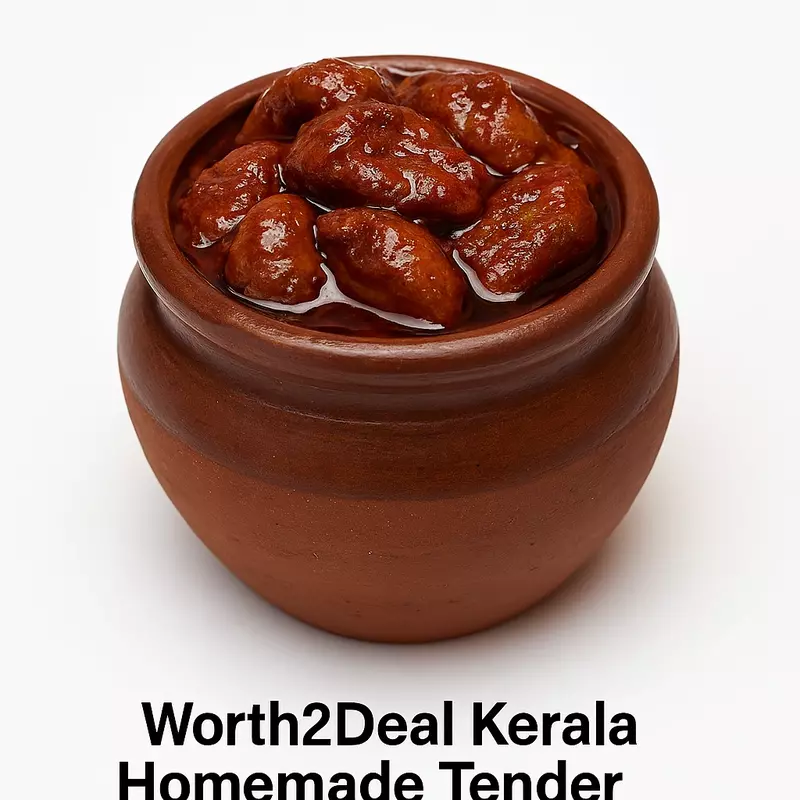


Buy Worth2Deal Kerala Tender Mango Pickle Online — Authentic Kannimanga Achar, Namboodiri Recipe, Pure Sesame Oil, No Preservatives
Share :
Worth2Deal Kerala Tender Mango Pickle is an authentic Kannimanga Achar — handpicked tender mangoes preserved in pure cold-pressed sesame oil with slow-roasted whole spices following the traditional Namboodiri recipe from Palakkad. No artificial preservatives, no synthetic colours, no Class II additives. Available in 200g and 400g with free pan-India delivery from Malappuram, Kerala.
Kerala's King of Pickles — What Kannimanga Achar Actually Is
Among the hundreds of pickles made across India, Kannimanga Achar holds a specific and irreplaceable position in Kerala cuisine. Multiple food writers and recipe sources — including Kothiyavunu.com, TeamNature, and Flipkart's product descriptions — call it the King of Pickles in Kerala. Not the most popular pickle generally, but the one that comes to mind first for any Malayali when the word achar is spoken.
The reason is simple. Kannimanga are the smallest, hardest, most intensely sour tender mangoes — picked at the very first stage of the season, before the fruit has any chance to develop sweetness or size. Kanni in Malayalam means virgin or first. These are first-of-season mangoes at peak acidity, firm enough to hold their shape through months of oil-and-spice maturation.
Worth2Deal sources Kannimanga at this precise stage, working with Namboodiri families in Palakkad who have been making this achar the same way for generations. The result is a pickle that tastes the way it should — bold, layered sourness with heat that builds, not burns.
The Namboodiri Method — Why the Recipe Source Matters
Namboodiri Brahmin households of Kerala have a rigorously documented culinary tradition. Their approach to achar is specific — slow-roasted whole spices, cold-pressed sesame oil, no vinegar, no artificial stabilisers. The Namboodiri Websites food archive documents that pickles (Uppalittathu) were considered essential at every meal, with fenugreek (Uluva) and mustard as the defining spice elements.
The key steps in the traditional Namboodiri Kannimanga preparation:
First, the tender mangoes are brined whole in rock salt — drawing out natural juices and beginning the fermentation process. The brine that forms is not discarded. According to Kothiyavunu.com's documented traditional recipe, this natural salt brine is incorporated back into the pickle base, carrying the pure extracted sourness of the fruit.
Second, mustard seeds are dry-roasted and then de-husked — separating the yellow inner seed from the black outer skin. This is a step skipped by most commercial producers. The yellow mustard seed delivers a sharper, cleaner pungency than the whole black seed.
Third, sesame oil is heated to a specific temperature, then cooled completely before it is added to the pickle. Hot oil poured directly into pickle shortens shelf life by creating uneven heat zones that accelerate spoilage. The cooled oil is poured on top and the jar is sealed with cloth before capping — traditional practice that allows the pickle to breathe while maturing.
The pickle then rests for a minimum of one month, ideally three months, before it is at its best. The sourness mellows and integrates with the spices during this time. Worth2Deal delivers Kannimanga Achar at this mature, developed stage — not freshly made.
Pure Cold-Pressed Sesame Oil — Not Substituted, Not Refined
Sesame oil — gingelly oil, nallenna in Malayalam — is the non-negotiable oil for Kerala achar. Multiple recipe and food sources confirm this. The Whisk Affair mango pickle documentation states sesame oil is "traditionally used" and that substituting mustard or sunflower oil "will change the flavor." The Kothiyavunu.com recipe specifically notes that "using sesame oil gives authentic and special flavor to the pickle and it helps pickle stay longer."
The reason sesame oil works as both a flavour and preservation agent is its high sesamol content — a natural antioxidant that slows rancidity. Cold-pressed sesame oil retains more sesamol than refined variants, which makes it both more flavourful and more effective as a natural preservative.
Worth2Deal uses only pure cold-pressed sesame oil in Kannimanga Achar. No refined sunflower oil, no palm oil, no oil blends.
What Kannimanga Achar Is Not — Important Distinctions for Buyers
Kannimanga Achar is not the same as commercial mango pickle sold under brands like Mother's Recipe, Priya, or MTR. These are made from larger, mature raw mangoes with standardised spice concentrates, Class II chemical preservatives, and artificial colours.
Kannimanga Achar is also not instant mango pickle (Kadumanga Achar) — the quick 15-minute version made with raw mango pieces tempered in hot oil, common for Onam Sadya preparation at home. That is a fresh pickle with a short shelf life. Kannimanga Achar is a matured, long-fermented preparation with a shelf life of 9 months unopened.
It is also not Manga Uppilittathu — the brine-fermented mango without oil or spice. If you prefer a mild, salt-only mango condiment with no heat and no oil, Worth2Deal makes Kerala Manga Uppilittathu — Kilichundan Mango in Brine — whole Kilichundan mangoes slow-fermented for six months in pure rock salt. Completely different product, same Namboodiri family tradition.
When and How to Use Worth2Deal Kannimanga Achar
With curd rice: A South Indian classic that balances the heat of the pickle with the cooling quality of yoghurt. One of the most naturally balanced pairings in Indian food — the creamy, mild curd and the bold, spiced mango complement each other precisely.
With chapati and paratha: Kannimanga Achar's sesame oil base absorbs into flatbread rather than pooling on the surface — making it a cleaner and more pleasant accompaniment than oil-heavy pickles. Works equally well with roti.
With Malabar biryani: A small serving of Kannimanga Achar alongside Kerala-style dum biryani provides tangy contrast that cuts through the richness of the rice dish — a traditional combination in Malabar homes.
With dosa, idli, and puttu: A small spoonful of Kannimanga Achar alongside crisp dosa or soft idli replaces the need for multiple chutneys. With red rice puttu and kadala curry, a piece of Kannimanga Achar is the third element that completes the breakfast plate.
For gifting: An authentic jar of Worth2Deal Kannimanga Achar is a meaningful gift for Kerala diaspora in Mumbai, Delhi, Bangalore, Hyderabad, Pune, Kolkata, and abroad — bringing the taste of home from Palakkad that no locally purchased alternative can replicate.
Also From Worth2Deal — Complete Your Kerala Pickle Collection
For a different Kerala pickle experience, explore Worth2Deal Kerala Homemade Garlic Pickle (Veluthulli Achar) — whole garlic cloves in Namboodiri spice blend, no preservatives, pure sesame oil. For the complete range of Worth2Deal traditional condiments, browse our Kerala Pickles and Kondattam collection.
Storage Instructions
Use a clean, completely dry spoon every single time. This is the most important rule for any oil-based pickle. Moisture from a wet spoon is the primary cause of fungal spoilage — confirmed by multiple traditional Kerala recipe sources including Kothiyavunu.com and Easy Cook's traditional documentation. Even a single wet spoon can contaminate an entire jar.
Keep the mango pieces submerged in sesame oil at all times. If the oil level drops as you use the pickle, add boiled and cooled sesame oil to bring the level back up above the mango pieces.
Store in a cool dry place before opening. Refrigerate after opening. Do not store in steel or iron containers — the acidic mango reacts with metal.
Shelf life: 9 months from date of manufacture unopened. After opening: 6 to 8 months under proper storage with dry spoon discipline.
Product Details
Net Weight: 200g / 400g Main Ingredients: Tender mango (Kannimanga), pure cold-pressed sesame oil, red chilli powder, mustard seeds, fenugreek seeds, asafoetida, natural rock salt Preparation Style: Traditional Namboodiri method, Palakkad, Kerala — brined, slow-matured, no vinegar Artificial Preservatives (Class II): None Artificial Colour: None Artificial Flavour: None MSG: None Product Type: Ready to eat Shelf Life: 9 months from manufacture (unopened) After Opening: Refrigerate, dry spoon only, keep mango submerged in oil Also known as: Kanni Manga Achar, Kadumanga Achar, Tender Mango Pickle, Vadumanga Pickle, Raw Mango Pickle Kerala Style Manufactured and Packed by: Worth2Deal, 7/330 Shanti Nagar, Valayamkulam, Kokkur Post, Malappuram District, Kerala 679591 FSSAI Licence No.: 21317233000044 Contact: worth2deal.com@gmail.com | +91 9846294242
FAQs-Worth2Deal Kerala Tender Mango Pickle
Q1: What is Kannimanga Achar?
Kannimanga Achar is a traditional Kerala tender mango pickle — considered the King of Pickles in Kerala by multiple food sources including Kothiyavunu.com, TeamNature, and Flipkart product documentation. Kanni means virgin or first in Malayalam, referring to the smallest, hardest, most intensely sour tender mangoes picked at the very start of the mango season. Worth2Deal Kannimanga Achar follows the traditional Namboodiri recipe from Palakkad — whole tender mangoes brined in rock salt, then matured in pure cold-pressed sesame oil with slow-roasted whole spices. No preservatives, no artificial colour, no Class II additives. FSSAI Lic. No.: 21317233000044.
Q2: What is the difference between Kannimanga Achar and regular mango pickle?
Kannimanga Achar uses the smallest, youngest tender mangoes — Kannimanga — harvested at the very first stage of the season before any sweetness develops. These are firm, intensely sour, and usually preserved whole or halved with their skin intact. Regular commercial mango pickle uses larger, more mature raw mangoes and typically contains Class II chemical preservatives and artificial colour. The Kannimanga version has sharper, more concentrated sourness and a firmer texture. Worth2Deal uses genuine Kannimanga — not mature raw mango — which cannot be substituted without changing the fundamental flavour of the pickle.
Q3: What is the difference between Kannimanga Achar and Manga Uppilittathu?
Kannimanga Achar is a spiced, oil-based pickle — sesame oil, chilli, mustard, fenugreek, asafoetida. It has heat, depth, and oil richness. Manga Uppilittathu is a brine-fermented mango — no oil, no spice, just mango fermented in pure rock salt. The Uppilittathu is mild, clean, and purely salty-sour. The Achar is bold, spiced, and oil-rich. Both are from the Namboodiri tradition. Worth2Deal makes both — if you prefer no spice and no oil, Worth2Deal Kerala Manga Uppilittathu — Kilichundan Mango in Brine is the right choice.
Q4: Does Worth2Deal Kannimanga Achar contain preservatives?
No. Worth2Deal Kerala Tender Mango Pickle contains no Class II preservatives — no sodium benzoate, no potassium sorbate, no sorbic acid — and no artificial food colour or synthetic flavour. Natural preservation comes from the combination of rock salt, the natural acidity of tender mangoes, the antimicrobial properties of mustard, and the antioxidant content of cold-pressed sesame oil. This is the same preservation logic Kerala households have used for generations, with shelf life of up to 9 months unopened.
Q5: Why is sesame oil used in Kannimanga Achar and not other oils?
Sesame oil — called gingelly oil or nallenna in Malayalam — is the traditional oil for Kerala achar for two specific reasons. First, it carries spices deeply and adds its own characteristic nutty-earthy flavour that other oils cannot replicate. Second, cold-pressed sesame oil contains sesamol, a natural antioxidant that slows rancidity, extending the shelf life of the pickle without chemical additives. Multiple traditional recipe sources including Kothiyavunu.com and The Tastes of India confirm that "using sesame oil gives authentic and special flavor and helps the pickle stay longer." Worth2Deal uses only pure cold-pressed sesame oil — not refined, not blended with cheaper oils.
Q6: How long does Worth2Deal Kannimanga Achar stay fresh?
Unopened, shelf life is 9 months from the date of manufacture when stored in a cool dry place. After opening, the pickle stays fresh for 6 to 8 months under proper storage conditions. The critical rules are: use a clean, completely dry spoon every time — even a single wet spoon introduction can cause fungal spoilage within days; keep the mango pieces submerged in sesame oil at all times — if oil level drops, add boiled and cooled sesame oil; refrigerate after opening; never store in steel or iron containers.
Q7: What meals does Kannimanga Achar pair best with?
Kannimanga Achar pairs best with Kerala red rice and kanji (rice porridge), curd rice, chapati and paratha, Malabar biryani, dosa, idli, and puttu. The pairing with red rice kanji is the most traditional — the sourness and heat of the pickle provides the flavour anchor for the bland starchy base. With curd rice, the cooling yoghurt balances the chilli heat. One small piece of tender mango with a teaspoon of the spiced oil per serving is the appropriate amount — this is a concentrated flavour condiment, not a side dish.
Q8: Can I order Worth2Deal Kannimanga Achar from Delhi, Mumbai, Bangalore, or Hyderabad?
Yes. Worth2Deal ships pan-India from Malappuram, Kerala with free delivery on all orders. We fulfil regular orders to Mumbai, Delhi, Bangalore, Hyderabad, Chennai, Pune, Kolkata, Ahmedabad, Kochi, Thiruvananthapuram, Kozhikode, Thrissur, Malappuram, Palakkad, Kannur, Coimbatore, Mysore, Surat, Jaipur, Lucknow, Nagpur, and all major cities. Delivery takes 4 to 7 working days. With a 9-month shelf life, the pickle arrives well within its quality window regardless of destination.
Q9: Is Kannimanga Achar vegetarian and vegan?
Yes — fully vegetarian and vegan. Ingredients: tender mango (Kannimanga), pure cold-pressed sesame oil, red chilli powder, mustard seeds, fenugreek seeds, asafoetida (hing), natural rock salt. No animal-derived ingredients. Naturally gluten-free. Note: asafoetida (hing) is included — those with specific Ayurvedic dietary guidelines or medical conditions that restrict hing should check before consuming.
Q10: Why do some mango pickles turn soft or mushy over time and how does Worth2Deal prevent this?
Texture breakdown in mango pickle happens from two main causes: using overripe mangoes that have already begun to soften, and moisture contamination in the jar during storage. Kannimanga are harvested at the firmest, youngest stage — the concentrated cell structure of these tiny unripe mangoes holds texture through months of brining and oil maturation. Worth2Deal follows the traditional two-stage process — salt brining first, then oil and spice — which draws out excess moisture from the mango before it enters the final jar. Once in your hands, using a dry spoon every time is the single most important practice to maintain texture and prevent spoilage.
Q11: Which cities does Worth2Deal deliver Kerala Tender Mango Pickle to?
Worth2Deal ships Kannimanga Achar across India with free delivery — including Mumbai, Delhi, Bangalore, Hyderabad, Chennai, Pune, Kolkata, Ahmedabad, Kochi, Thiruvananthapuram, Kozhikode, Thrissur, Malappuram, Palakkad, Kannur, Mysore, Coimbatore, Jaipur, Surat, Lucknow, Nagpur, Bhopal, Patna, Guwahati, Chandigarh, Bhubaneswar, Vizag, and all major cities and towns across India. Dispatched from Malappuram, Kerala within 1 to 2 business days, delivered in 4 to 7 working days.
Q12: Will demand for authentic regional pickles like Kannimanga Achar keep growing online?
Yes — supported by clear market data. Online pickle sales in India are growing at 25 to 30% annually (The India Watch, 2025). India's pickle market reached USD 592.66 million in 2024 and is projected to nearly double to USD 976.08 million by 2033 at a CAGR of 5.30% (IMARC Group, 2024). Regional specialities — particularly authentic Kerala, Karnataka, and Bihar pickles — are the fastest-growing consumer segment as urban buyers actively seek traditional alternatives to industrial brands. Approximately 70% of India's pickle market remains in the unorganised sector (The India Watch, 2025), confirming that the best products still come from small regional producers following traditional recipes. Worth2Deal has been producing authentic Namboodiri-style Kannimanga Achar in Malappuram since 2017.