

Flours and Powders for Daily Cooking Buy Kerala Tapioca Flour Online — Pure Kappa Podi (Maracheeni Podi), Gluten Free Cassava Flour for Cooking, Baking and Fasting | Worth2Deal
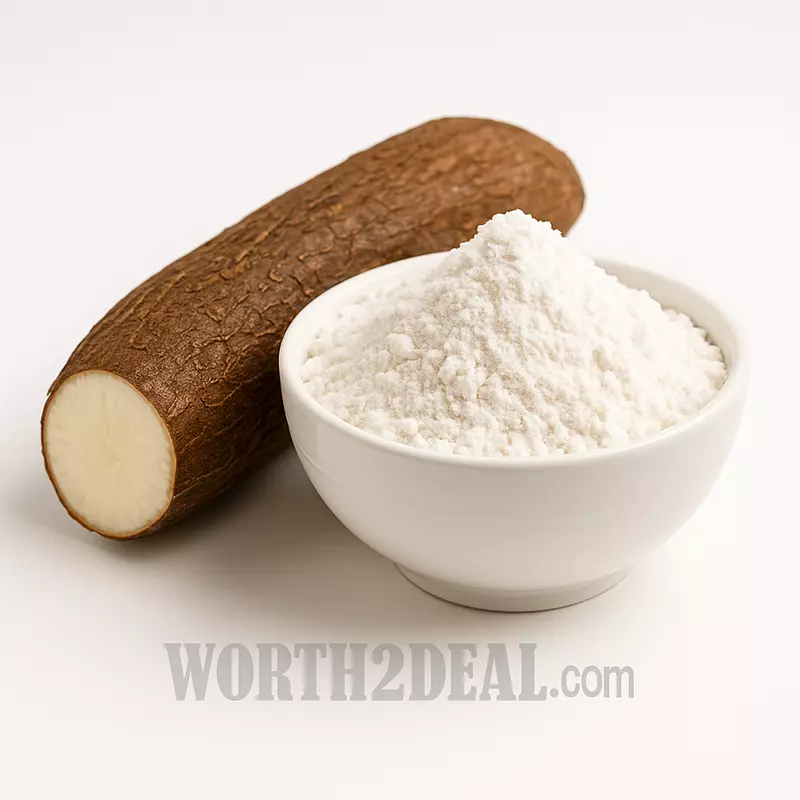


Buy Kerala Tapioca Flour Online — Pure Kappa Podi (Maracheeni Podi), Gluten Free Cassava Flour for Cooking, Baking and Fasting | Worth2Deal
Pure Kerala Cassava Flour — organically farmed, finely milled, naturally gluten-free. Made from hand-selected tapioca roots grown in Kerala's fertile red soil. Zero chemicals. Zero bleach. Perfect for cooking, baking, fasting and thickening. Also known as Kappa Podi or Maracheeni Podi. 500g pack. Free pan-India delivery. FSSAI 21317233000044. Order now.
Non-returnable
Rs.259.00 Rs.329.00
Available Offer
Share :
Product Details
Tapioca Flour — also called Cassava Flour, Kappa Podi (കപ്പ പൊടി), or Maracheeni Podi in Malayalam — is a pure, white, naturally gluten-free powder made from the root of the cassava plant (Manihot esculenta). Worth2Deal's Kerala Tapioca Flour is sourced from organically farmed cassava fields in Kerala, cleaned, dried, and finely milled without chemicals, bleach, or artificial whiteners. It is ideal for everyday cooking, traditional Kerala snacks, gluten-free baking, vrat (fasting) recipes, and as a grain-free cornstarch substitute. 500g pack. Free pan-India shipping. FSSAI Lic. No. 21317233000044.
What Is Tapioca Flour?
Imagine a vegetable that looks like a long brown potato. That is cassava — called Kappa (കപ്പ) or Maracheeni (മരച്ചീനി) in Kerala. When you peel it, wash it, dry it, and grind it into a fine white powder — you get tapioca flour.
That is it. One ingredient. One process. One powder.
No wheat. No gluten. No chemicals. Just cassava.
In Kerala, cassava has been growing in backyards and fields for over 200 years. It is the vegetable that fed millions during the Second World War when rice was scarce. Today, its flour has quietly become one of the most useful ingredients in Indian kitchens — from traditional breakfast puttu to modern gluten-free baking and vrat (fasting) cooking.
Worth2Deal's Tapioca Flour is made from organically farmed Kerala cassava — sourced, processed, and packed from Malabar. FSSAI Lic. No. 21317233000044.
Tapioca Flour vs Cassava Flour — Are They the Same Thing?
This is the question everyone asks. And the answer is: almost, but not exactly.
| Tapioca Flour / Starch | Cassava Flour | |
|---|---|---|
| Made from | Starchy part of cassava root | Whole dried cassava root |
| Texture | Very fine, smooth, silky | Slightly coarser, more fibre |
| Best for | Thickening, binding, light baking | Heavy baking, flatbreads, rotis |
| Gluten free | ✅ Yes | ✅ Yes |
| Indian names | Kappa Podi, Sabudana Atta | Maracheeni Podi (whole flour) |
| Taste | Neutral | Slightly earthy |
Worth2Deal's product is a fine-milled tapioca flour — smooth, white, and ideal for both thickening and light baking. Think of it as cassava flour's lighter, silkier cousin.
Key Takeaway: For thickening, binding, and light baking — use tapioca flour. For heavy roti-style baking — use whole cassava flour. This product does both, but excels at the former.
Tapioca Flour Nutrition Facts — What Is Actually Inside
(Per 100g)
| Nutrient | Amount | What It Means |
|---|---|---|
| Calories | 358 kcal | High energy — great for active people and fasting days |
| Carbohydrates | 88g | Primary energy source — clean carbs with no additives |
| Protein | 0.2g | Very low — not a protein source |
| Fat | 0.1g | Near-zero fat — suitable for low-fat diets |
| Dietary Fibre | 0.9g | Mild fibre — gentle on digestion |
| Sodium | ~5mg | Very low — suitable for low-sodium diets |
| Iron | Trace amounts | Minor contribution |
| Calcium | ~20mg | Small contribution |
| Gluten | 0 | Completely gluten-free |
| Allergens | None known | Safe for most food allergies |
Tapioca flour is essentially pure starch — high energy, low fat, zero gluten, and easy to digest. This makes it the go-to choice for people with celiac disease, wheat intolerance, IBS, and anyone following grain-free or vrat diets.
8 Ways You Can Use Tapioca Flour Right Now
1. Traditional Kerala Kappa Puttu Mix tapioca flour with a little water and salt. Layer with grated coconut in a puttu maker. Steam. Serve with kadala curry. This is Kerala breakfast in its most traditional form.
2. Thickening Soups, Gravies and Curries Mix 1 teaspoon of tapioca flour with 2 tablespoons of cold water. Stir into your curry or soup at the end of cooking. It thickens in seconds without changing the flavour. Zero lumps. This is the clean alternative to cornstarch and maida.
3. Gluten-Free Baking Replace 25–30% of wheat flour in your regular baking recipe with tapioca flour. The result is lighter, airier cakes, cookies, and pancakes with a slightly chewy texture. For completely gluten-free baking, combine with almond flour or rice flour.
4. Vrat (Fasting) Recipes — Navratri, Ekadashi, Janmashtami Tapioca flour is one of the few flours permitted during Hindu fasting periods. Use it to make vrat ke pakode, fasting pancakes, thalipeeth, or sabudana-style snacks. It is widely used as sabudana atta for vrat across Maharashtra, Gujarat, and UP.
5. Crispy Coatings for Frying Coat chicken, vegetables, or paneer in tapioca flour before frying. The result is a crispy, golden shell that is significantly lighter and crunchier than maida-coated frying. Also holds up better in wet sauces — the coating stays crispy longer.
6. Soft Rotis and Flatbreads Add 2 tablespoons of tapioca flour per cup of wheat flour when making rotis. The tapioca makes the dough more pliable and the roti softer, lighter, and easier to digest.
7. Binding Agent for Cutlets and Tikkis When making vegetable cutlets, potato tikkis, or fish cakes, use tapioca flour instead of maida or bread crumbs as the binder. It holds the shape without leaving a floury aftertaste.
8. Skin and Hair Care (Traditional Use) Tapioca starch water — the liquid after boiling cassava — has been used in Kerala as a natural face powder, skin softener, and hair rinse for generations. The fine tapioca flour itself can be used as a dry shampoo, body powder, or face mask base.
Is Tapioca Flour Good for You? Health Benefits Explained Simply
Good for people with gluten intolerance or celiac disease
Tapioca flour contains absolutely zero gluten. People who cannot eat wheat, barley, or rye can use tapioca flour freely without any reaction. It is one of the safest grain-free flours available.
Good for people with IBS or sensitive digestion
Tapioca is easily digestible and is classified as a low-FODMAP food — meaning it is less likely to trigger IBS symptoms than wheat flour or high-fibre alternatives. It is gentle, soothing, and easy on the gut.
Good for high-energy requirements
At 358 kcal per 100g of pure carbohydrates, tapioca flour provides fast, clean energy. It is used in recovery foods and high-energy traditional dishes across South and Southeast Asia for exactly this reason.
Good for fasting days
Being grain-free and wheat-free, tapioca flour qualifies for most Hindu fasting protocols including Navratri, Ekadashi, and Janmashtami. It is the practical substitute for sabudana atta in vrat recipes.
Honest note on what tapioca flour is NOT:
Tapioca flour is not a protein source (only 0.2g per 100g). It is not a fibre powerhouse. It is pure starch — best understood as a clean, versatile, allergen-free thickener and baking ingredient rather than a nutritional supplement. Always consult your doctor or dietitian for specific health conditions.
How to Cook with Tapioca Flour — Ratios and Tips
As a thickener: Use 1 tablespoon of tapioca flour to thicken 1 cup (250ml) of liquid. Mix with cold water first before adding to hot liquid — this prevents lumping. Add at the end of cooking. Thickens at lower temperatures than cornstarch.
For baking: Replace up to 25% of regular flour in any recipe. Beyond 30%, the texture becomes too chewy. For completely gluten-free bread, combine with a binder (xanthan gum or psyllium husk) — tapioca alone does not hold structure in bread.
For puttu / traditional dishes: Use 1 cup tapioca flour + ¼ cup water + salt. Mix to a coarse, damp crumble (not a dough). Layer with coconut and steam.
Storage tip: Store in an airtight container away from moisture. Shelf life: 9–12 months when stored correctly. Keep away from direct sunlight. Do not refrigerate — moisture will cause clumping.
Why Tapioca Flour Gets Gummy — and How to Avoid It
This is the most common kitchen complaint about tapioca flour. Here is the honest answer:
Tapioca flour gets gummy when overheated or when too much is used. The starch molecules over-gelatinise and become sticky.
The fix: Use less. Start with half the amount you think you need. Add tapioca to cold liquid first, never directly to hot liquid. Remove from heat as soon as the sauce thickens — do not keep cooking it. If making baked goods, do not exceed 25–30% substitution ratio.
One more thing: tapioca-thickened sauces do not reheat well. They get stringy when reheated. For dishes you plan to reheat the next day, use arrowroot powder instead.
Tapioca Flour vs Maida — Which Is Better?
Short answer: for most home cooking purposes, tapioca flour is the cleaner choice.
| Tapioca Flour | Maida (Refined Wheat Flour) | |
|---|---|---|
| Gluten | None | High |
| Processing | Minimal — dried and ground | Heavily refined, bleached |
| Digestion | Easy | Difficult for many people |
| Thickening ability | Excellent | Good |
| Baking | Good (with other flours) | Excellent alone |
| Suitable for fasting | ✅ Yes | ❌ No |
| Allergen risk | Very low | Wheat allergy risk |
| Gut impact | Gentle, low-FODMAP | Can aggravate IBS |
Tapioca flour is not a one-to-one replacement for maida in all applications. But for thickening, light baking, fasting recipes, and grain-free cooking — it is clearly the better option.
Why Worth2Deal Kerala Tapioca Flour Is Different
Here is what you are actually buying when you order from Worth2Deal:
- Kerala-sourced cassava — grown in the same red-soil fields of Kerala that have been producing cassava for 200+ years
- Organically farmed — no chemical fertilisers, no pesticide residue on the root
- No bleaching, no whiteners — some commercial tapioca flour is chemically whitened to achieve a brilliant white colour. Ours is naturally white because we start with quality root
- Hygienically milled — semi-automated process minimises human contact from root to pack
- Freshly packed — not sitting in a warehouse for months
- 500g in a clean, sealed pack — practical size for household use
- FSSAI Lic. No. 21317233000044 — certified food safety, not a claim, a licence number
Internal Links
- Buy Kerala Matta Rice (for traditional puttu and rice meals): worth2deal.com/buy-kerala-matta-rice-online
- Read Kerala traditional cooking articles: paithrka.com
FAQs
Q: What is tapioca flour?
A: Tapioca flour is a fine white powder made from the starchy part of the cassava root (Manihot esculenta). In Kerala it is called Kappa Podi (കപ്പ പൊടി) or Maracheeni Podi (മരച്ചീനി പൊടി). It is completely gluten-free, neutral in taste, and used for thickening soups and gravies, light baking, traditional Kerala snacks, and vrat (fasting) recipes. Worth2Deal's tapioca flour is sourced from organically farmed Kerala cassava — FSSAI Lic. No. 21317233000044.
Q: Is tapioca flour the same as cassava flour?
A: Not exactly. Both come from the cassava root, but tapioca flour is made from just the starchy part of the root — finely processed and very smooth. Cassava flour is made from the whole dried root and is coarser with more fibre. Tapioca flour is better for thickening and light baking. Cassava flour is better for heavy baking and flatbreads. They can substitute for each other in many recipes but not always perfectly.
Q: What is the Indian name for cassava flour?
A: In Kerala, cassava flour is called Kappa Podi (കപ്പ പൊടി) or Maracheeni Podi (മരച്ചീനി പൊടി). In Tamil Nadu it is known as Maravallik Kilangu Maavu. In Hindi-speaking states it is sometimes called Sabudana Atta or Kathal Atta. In Maharashtra it is often referred to as Sagudana Pith in the context of fasting recipes. The international name is tapioca flour or cassava starch.
Q: Is tapioca flour gluten free?
A: Yes — 100% gluten free. Tapioca flour contains absolutely no gluten because it comes from cassava, which is not a grain. It is safe for people with celiac disease, wheat intolerance, and gluten sensitivity. It is one of the most widely recommended gluten-free flours for Indian cooking because it is affordable, neutral in taste, and available locally.
Q: Can I use tapioca flour for vrat (fasting) recipes?
A: Yes. Tapioca flour is permitted during most Hindu fasting periods including Navratri, Ekadashi, and Janmashtami because it is grain-free and wheat-free. It is used as a substitute for sabudana atta in vrat ke pakode, thalipeeth, fasting pancakes, and other Navratri snacks. Always verify with your specific fasting protocol — regional and family traditions vary on which ingredients are permitted.
Q: What is the difference between tapioca flour and tapioca starch?
A: In most practical contexts, tapioca flour and tapioca starch are the same product sold under different names. Both are fine white powders made from the starchy extract of cassava root. Some specialty products labelled "tapioca starch" may be more finely processed than standard tapioca flour, but in Indian kitchen use — and for all applications on this listing — the two terms refer to the same ingredient.
Q: How do I use tapioca flour as a thickening agent?
A: Mix 1 tablespoon of tapioca flour with 2 tablespoons of cold water to form a smooth slurry. Stir into your curry, soup, or gravy at the end of cooking and simmer on low for 1–2 minutes until it thickens. Never add tapioca flour directly to hot liquid — it will clump. Remove from heat as soon as the desired thickness is reached. Use half the amount you would use for cornstarch — tapioca flour is approximately twice as effective as a thickener.
Q: Can I substitute tapioca flour for cassava flour in baking?
A: In most recipes, yes — with adjustment. Tapioca flour is lighter and silkier than cassava flour. When substituting in baking recipes, use about 75% of the quantity — for example, if a recipe calls for 1 cup of cassava flour, use ¾ cup of tapioca flour. The result will be slightly lighter and more delicate. For recipes that require the structure of whole cassava flour (like cassava tortillas), the substitution may not work well without additional binders.
Q: Is tapioca flour good for people with IBS?
A: Generally yes. Tapioca flour is classified as a low-FODMAP food, meaning it is unlikely to trigger IBS symptoms compared to wheat flour or high-fibre alternatives. It is easily digestible, gentle on the gut, and does not ferment aggressively in the digestive tract. However, individual responses vary — people with specific IBS triggers should introduce it gradually and monitor their response. Consult your gastroenterologist for personalised dietary advice.
Q: Does cassava flour spike blood sugar?
A: Tapioca flour / cassava flour has a moderate-to-high glycemic index (GI ~70) because it is primarily pure starch. It can raise blood sugar faster than low-GI foods like legumes or most vegetables. For people managing diabetes, tapioca flour is best used in small quantities as a thickener or mixed with fibre-rich ingredients rather than as a primary carbohydrate. Consult your doctor or dietitian before incorporating it regularly into a diabetic meal plan.
Q: Why is my tapioca flour getting gummy? A: Three reasons: (1) Too much flour was used — use less than you think you need; (2) The flour was added directly to hot liquid instead of making a cold-water slurry first; (3) Overcooked — tapioca over-gelatinises when kept on heat after it has already thickened. The fix: make a cold slurry first, add gradually, remove from heat the moment it thickens, and start with half the quantity you expect to need.
Q: What is the shelf life of tapioca flour?
A: Properly stored, tapioca flour lasts 9 to 12 months. Store in an airtight container away from moisture, direct sunlight, and heat. Do not refrigerate — the temperature differential causes condensation inside the container, which introduces moisture and causes clumping. If your tapioca flour smells sour, shows mold, or has changed colour from white to cream or yellow, discard it.
Q: How do I store tapioca flour to keep it fresh?
A: Transfer to an airtight glass or BPA-free plastic container immediately after opening. Keep in a cool, dry cupboard — not near the stove or sink. Keep away from strong-smelling spices as the flour can absorb odours. Do not refrigerate. Use a clean, dry spoon every time — wet utensils introduce moisture. Properly stored in Kerala's climate, the flour will stay fresh for 9–12 months.
Q: What is the best substitute for tapioca flour?
A: The closest substitute is arrowroot powder — same 1:1 ratio, similar neutral taste, also gluten-free, and behaves almost identically as a thickener. Cornstarch (corn flour) is the most commonly available substitute — use half the quantity (tapioca thickens more powerfully). Rice flour works as a substitution in some baking recipes but is not as effective for thickening. Potato starch is another option, especially in baking.
Q: Is cassava flour okay for people with IBS or gut problems?
A: Tapioca flour (cassava starch) is generally considered gut-friendly — it is low-FODMAP, easily digestible, and non-inflammatory. Whole cassava flour (made from the entire root) contains more fibre, which may affect very sensitive digestive systems differently. Worth2Deal's product is finely milled tapioca flour — the lighter, gentler of the two. People with Crohn's disease, severe IBS, or digestive conditions should consult a doctor before dietary changes.
Q: Where can I buy tapioca flour online in India?
A: Worth2Deal (worth2deal.com) sells authentic Kerala-sourced organic Tapioca Flour with free pan-India shipping, FSSAI Lic. No. 21317233000044, and 500g packs ready to order. Available for delivery across Mumbai, Delhi, Bangalore, Chennai, Hyderabad, Pune, Kochi, Kozhikode, Thrissur, Ahmedabad, and all major cities. When buying from any seller, check for: FSSAI licence on pack, Kerala or South India origin, and no chemical whitening claim.
Q: Is tapioca flour the same as sabudana or sabudana atta?
A: Related but different. Sabudana (sago pearls) and tapioca flour both come from cassava starch, but sabudana is processed into round white pearls, while tapioca flour is finely ground into powder. "Sabudana atta" or "sabudana flour" is the powdered form of sabudana — essentially the same as tapioca flour in composition and use. In vrat recipes across North and West India, the two are often interchangeable.
Q: Can tapioca flour be used for making rotis?
A: Not on its own — tapioca flour has no gluten, so it does not form the stretchy dough structure needed for rotis. However, adding 2 tablespoons of tapioca flour per cup of wheat or jowar flour makes rotis lighter, softer, and easier to digest. For completely gluten-free rotis, tapioca flour must be combined with a binder like psyllium husk or xanthan gum. Traditional Kerala uses it in puttu and snacks rather than flatbreads.
Q: Can I use tapioca flour for making crispy fried snacks?
A: Yes — and this is one of its best uses. Tapioca flour creates a thinner, crispier coating than maida when used for frying. Coat the item (chicken, vegetable, paneer) in tapioca flour and fry in hot oil. The coating stays crispy longer than maida coating and does not become greasy. For maximum crispiness, use tapioca flour mixed with a small amount of rice flour (70:30 ratio).
Q: What are the disadvantages or side effects of tapioca flour?
A: Tapioca flour has very few side effects when used appropriately. The points to be aware of: (1) High GI (~70) — can raise blood sugar faster than low-GI alternatives; (2) Very low protein and fibre — not nutritionally complete on its own; (3) Raw cassava contains cyanogenic compounds — but commercially processed tapioca flour has these completely removed during processing and is safe; (4) Thickened sauces do not reheat well — they become stringy. Use arrowroot for dishes you plan to reheat. Worth2Deal's tapioca flour is hygienically processed and completely safe for regular use.
NAP BLOCK
Sold by: Worth2Deal 7/330 A, Shanthi Nagar, Kokkur, Malappuram, Kerala — 679591 Email: worth2deal.com@gmail.com | Phone: +91 9846294242 | WhatsApp: +91 79071 68550 Website: www.worth2deal.com FSSAI Lic. No. 21317233000044
Worth2Deal Kerala Tapioca Flour (Kappa Podi) is available for delivery across India — Mumbai, Delhi, Bangalore, Chennai, Hyderabad, Pune, Kolkata, Ahmedabad, Kochi, Thiruvananthapuram, Kozhikode, Thrissur, Mysore, Coimbatore, Jaipur, Lucknow, Surat, Bhopal, Indore, Patna, Nagpur, Vadodara, and all major cities and Tier-2 towns. Free shipping on all orders.
Ratings And Reviews