

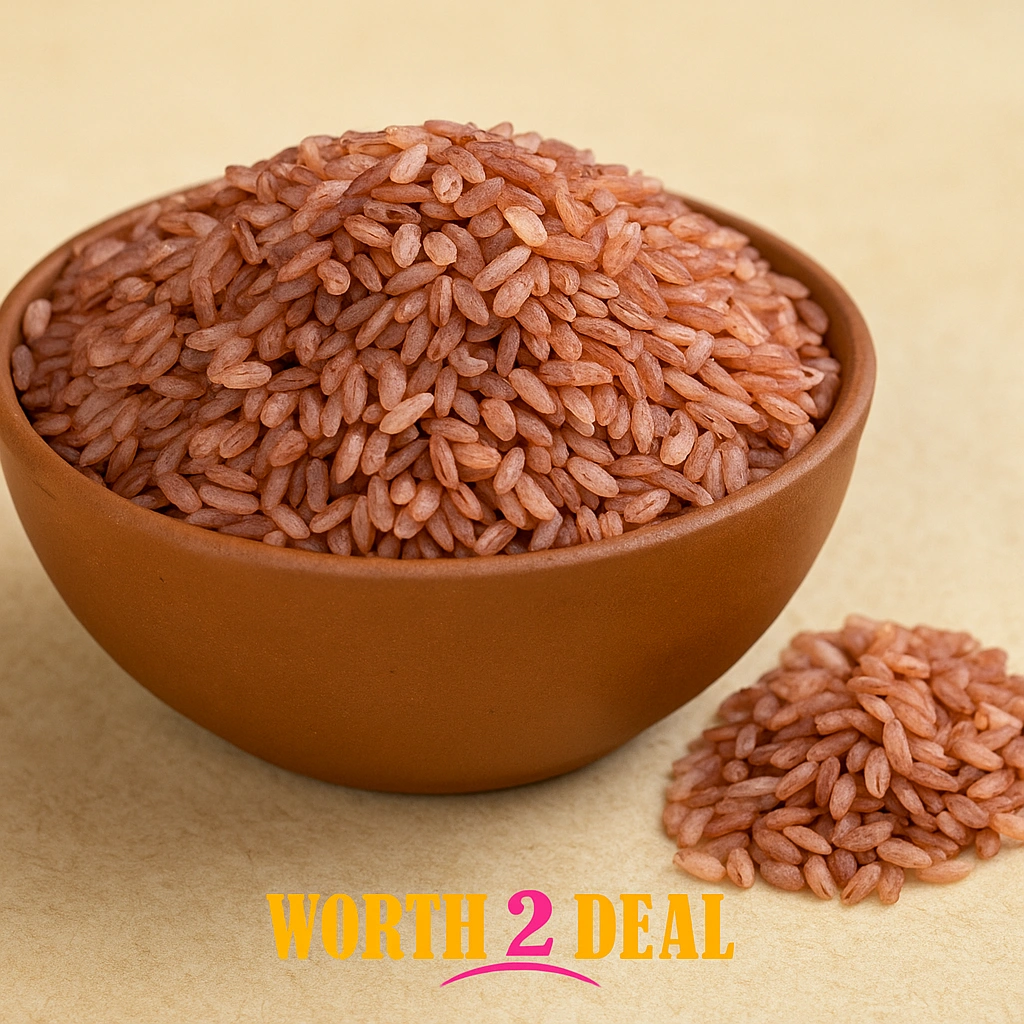


Buy Worth2Deal Ottapuzhukkan Matta Rice Online — Single Boiled Palakkadan Red Rice
Available Offer
Share :
Ottapuzhukkan Matta Rice is the single-boiled variety of GI-certified Palakkadan red rice from Kerala — processed only once using the traditional Kerala method to preserve more B vitamins, retain the full red bran layer, and deliver the deeper earthy aroma that double-boiled matta rice cannot match.
The Rice Kerala Has Eaten for a Thousand Years
When Kerala's royal families of the Chola and Chera dynasties sat down to eat, this was the rice on their plate. Palakkadan Matta Rice — called Ottapuzhukkan when single-boiled, meaning literally "boiled once" in Malayalam — has been cultivated in the dense black cotton soil of Palakkad's poonthalpadam fields for over a thousand years. It is mentioned in Tamil classics including the Thirukkural. It fed the paddy farmers of Palakkad for generations before it earned a Geographical Indication tag. It is still the rice most Kerala households cook every day — not because it is trendy, but because nothing else tastes or nourishes quite like it.
Worth2Deal sources Ottapuzhukkan Matta Rice directly from Palakkad farms — the only place in India where authentic GI-certified Palakkadan Matta grows on that specific black cotton clay soil that gives it its distinct earthy flavour, bold grain, and deep reddish-brown colour.
What Is Ottapuzhukkan Matta Rice — And Why Does the Name Matter?
The word breaks down simply in Malayalam: Otta (ഒറ്റ) means single or one. Puzhukkan (പുഴുക്കൻ) means boiled or cooked. Together — single boiled. This is the critical difference between Ottapuzhukkan and regular double-boiled matta rice sold in most supermarkets.
In double-boiled matta, the paddy goes through two rounds of high-heat processing — which cooks faster and lasts longer on shelves, but strips away heat-sensitive B vitamins, reduces bran integrity, and flattens the grain's natural earthy aroma. Ottapuzhukkan matta is boiled only once — the traditional Kerala method — which preserves more of the grain's natural nutrition, retains the full red pericarp, and delivers the deeper, nuttier aroma that Kerala families recognise from childhood.
In English, Ottapuzhukkan Matta Rice is called Single Boiled Parboiled Red Rice. In Hindi it is known as Ek Baar Ubla Lal Chawal. In Tamil it is Oru Murai Puzhungal Arisi. Across South India it is also known as Rosematta, Kerala Red Rice, Palakkadan Matta, and Kaje Rice in Karnataka.
Why Palakkad — and Why It Cannot Be Grown Anywhere Else
Palakkadan Matta Rice holds Geographical Indication Tag under the GI of Goods (Registration and Protection) Act, 1999 — registered by the Palakkad Matta Farmers Producer Company Ltd. This is not a marketing label. GI certification means this rice variety is legally tied to one specific geography, because the soil and climate of that geography are inseparable from the product's quality.
The black cotton soil of Palakkad — called regar soil — is derived from lime-rich rocks unique to this region. It holds 60–80% clay and silt, has low permeability and exceptional water-holding capacity, and creates growing conditions that concentrate nutrients in the rice grain in ways that cannot be replicated in other soils. This is the soil Worth2Deal sources from directly — Palakkad farms, no middlemen.
Nutrition That White Rice Simply Cannot Match
Ottapuzhukkan Matta Rice retains its outer bran layer — the part that polished white rice completely removes. That bran layer is where the nutrition lives. Traditional red rice, including Palakkadan Matta, contains five times more iron, three times more zinc, and twice as much fibre compared to polished Basmati, according to research cited in The Hindu. Per serving, Ottapuzhukkan Matta delivers dietary fibre, magnesium, calcium, zinc, iron, B vitamins, and anthocyanins — the natural antioxidant that gives the rice its deep red colour and has been studied for anti-inflammatory properties.
The glycaemic index of authentic Kerala-style single-boiled matta rice is approximately 52 — placing it firmly in the low GI category. Machine-processed double-boiled versions can jump to GI 65 and above. This difference matters enormously for blood sugar management. A 2021 study in Nutrition Journal tracked South Indians with type 2 diabetes and found that those eating matta rice daily showed meaningfully lower post-meal glucose spikes compared to the white rice group over three months.
Magnesium content is another standout — approximately 42mg per half-cup serving — supporting heart function, bone health, blood pressure regulation, and nervous system health. Low magnesium is linked to insulin resistance; Ottapuzhukkan Matta is one of the most practical dietary sources of this mineral in the Kerala kitchen.
What Ottapuzhukkan Matta Rice Tastes Like — and What to Eat It With
The grain is bold and plump. When cooked correctly it absorbs curry deeply — better than Basmati, better than white rice — because the bran surface holds liquid and flavour in a way polished grains cannot. The texture is firm and satisfying. The aroma is earthy, nutty, and distinctly Palakkadan — a smell most Kerala families associate with the kitchen at lunchtime.
Ottapuzhukkan Matta pairs perfectly with sambar, fish curry, thoran, avial, Kerala beef curry, dal, curd rice, rasam, naadan chicken curry, meen curry, and theeyal. It is the rice served at every traditional Kerala Onam Sadya. The kanji water — the starchy liquid drained after cooking — is itself a traditional Kerala wellness drink consumed as a mid-meal beverage or hair wash.
Also From Worth2Deal Kerala Rice
For those who prefer a rounder, shorter grain with a softer cooked texture, explore our Palakkadan Unda Matta Rice — the classic round-grain Palakkadan variety sourced from the same Palakkad farms, ideal for Onam Sadya and traditional Kerala meals For our full Kerala rice collection, explore Kerala Rice & Brown Rice
How to Cook Worth2Deal Ottapuzhukkan Matta Rice — 3 Methods
Rinse the rice 4–5 times until water runs clear. Soak for a minimum of 30 minutes — up to 2 hours for faster cooking.
Pressure Cooker (Recommended): Use 1 cup rice to 3.5 cups water. Cook on medium flame for 4–5 whistles. Switch off and allow pressure to release naturally — do not open early. Drain excess water and serve.
Open Vessel (Traditional Kerala Method): Use 1 cup rice to 8 cups water in a large pot. Bring to full boil, add soaked rice, cook on medium flame for 20–25 minutes stirring occasionally. Press a grain between fingers to check — it should mash easily. Drain through colander.
Instant Pot: 1 cup rice to 2 cups water. Pressure cook on high for 10 minutes. Natural release for 10 minutes, then open valve. Drain any remaining water and rinse lightly to remove excess starch.
Storage Instructions
Store in a cool, dry, airtight container away from direct sunlight. Keep away from moisture. Add 2–3 dried cloves or a bay leaf inside the container to naturally prevent infestation during long storage — the traditional Kerala method used in every household. Best consumed within 6–8 months of purchase for optimal flavour and nutrition.
Product Details
Net Weight: 2kg | 5kg | 10kg Type: Single Boiled (Ottapuzhukkan) Parboiled Red Rice Variety: Palakkadan Matta — GI Certified Colour: Deep reddish-brown (natural, from bran and anthocyanin) Bran: Retained — unpolished Artificial Colour: None Preservatives: None Shelf Life: 12 months from date of packing (unopened, stored correctly) Source: Directly from Palakkad farms, Kerala Cleaned, sorted, and hygienically packed Manufactured and Packed by: Worth2Deal, 7/330 Shanti Nagar, Valayamkulam, Kokkur Post, Malappuram District, Kerala 679591 FSSAI Licence No.: 21317233000044 Customer Support: worth2deal@gmail.com | +91 9846294242
FAQ-Worth2Deal Ottapuzhukkan Matta Rice
What is Ottapuzhukkan Matta Rice?
Ottapuzhukkan Matta Rice is the single-boiled variety of traditional Palakkadan Matta Rice from Kerala. "Otta" means single and "Puzhukkan" means boiled in Malayalam — so Ottapuzhukkan literally means "boiled once." It is the traditional Kerala method of processing matta rice that preserves more nutrition, retains the full red bran layer, and delivers the deeper earthy aroma associated with authentic Kerala rice. In English it is called Single Boiled Parboiled Red Rice. FSSAI Lic. No.: 21317233000044.
What is the difference between Ottapuzhukkan and regular double-boiled Matta Rice?
Ottapuzhukkan matta is boiled only once during processing — preserving more B vitamins, maintaining full red pericarp integrity, and delivering a nuttier, earthier aroma. Double-boiled matta goes through two rounds of high-heat processing, which extends shelf life but reduces heat-sensitive nutrients and lightens the grain's natural colour and aroma. Worth2Deal supplies only single-boiled Ottapuzhukkan Matta — the traditional Kerala choice.
Is Ottapuzhukkan Matta Rice good for diabetics?
Yes. Authentic single-boiled Palakkadan Matta Rice has a glycaemic index of approximately 52 — low GI — meaning it releases glucose into the bloodstream slowly and steadily, preventing the sharp blood sugar spikes caused by white rice. It is also rich in dietary fibre and magnesium, both of which support stable blood sugar levels. A 2021 study in Nutrition Journal found diabetic patients eating matta rice daily showed meaningfully lower post-meal glucose compared to white rice groups. Consult your doctor or nutritionist for personalised dietary advice.
Is Palakkadan Matta Rice GI certified?
Yes. Palakkadan Matta Rice holds a Geographical Indication tag registered under the GI of Goods (Registration and Protection) Act, 1999 by the Palakkad Matta Farmers Producer Company Ltd. This means the variety is legally certified to originate from Palakkad, Kerala — where the unique black cotton soil and climate create qualities no other region can replicate. Worth2Deal sources directly from Palakkad farms.
How do I cook Ottapuzhukkan Matta Rice in a pressure cooker?
Rinse the rice 4–5 times until water runs clear. Soak for 30 minutes minimum. In a pressure cooker, use 1 cup rice to 3.5 cups water. Cook on medium flame for 4–5 whistles. Switch off and allow pressure to release naturally — do not open early. Drain excess water. The rice should be soft, separate, and plump. Ottapuzhukkan matta cooks faster than double-boiled matta due to the single-boil process.
What does Matta Rice taste like?
Palakkadan Matta Rice has a bold, earthy, nutty flavour that is distinctly different from white rice or Basmati. The cooked grain is plump and firm, absorbs curry deeply, and carries a warm reddish hue. The aroma is characteristic of Palakkad's black cotton soil — most Kerala families associate it with the smell of home cooking at lunchtime. It is not aromatic like Basmati but is deeply satisfying in its own way.
Why is Matta Rice red?
The deep reddish-brown colour of Palakkadan Matta Rice comes from its outer bran layer, which contains anthocyanins — natural water-soluble pigments with antioxidant properties. This bran is left intact in unpolished matta rice. When cooked, the pigment leaches slightly into the grain, giving it its signature colour. Polished or double-boiled versions lose much of this colour and the associated antioxidants. The red colour in Worth2Deal Ottapuzhukkan Matta is entirely natural — no artificial colour added.
What is the kanji water from Matta Rice used for?
Kanji vellam — the starchy water drained after cooking matta rice — is a traditional Kerala wellness practice. It is consumed warm as a mid-meal beverage and is considered nourishing in Ayurvedic practice. It is also used for washing hair (adds natural shine and reduces scalp dryness), washing face, and as a natural starch for cotton sarees. Nothing from cooking Ottapuzhukkan Matta is wasted in the traditional Kerala household.
Can I eat Matta Rice daily?
Yes. Palakkadan Matta Rice is a traditional daily staple across Kerala households and has been for centuries. Its fibre content, lower GI, magnesium, iron, and B vitamins make it a more nutritious daily choice than polished white rice. Portion control applies as with any carbohydrate, particularly for diabetics. Worth2Deal Ottapuzhukkan Matta is free from preservatives and artificial additives — safe for daily family use. FSSAI Lic. No.: 21317233000044.
What is the difference between Ottapuzhukkan Matta and Unda Matta Rice?
Ottapuzhukkan Matta is the single-boiled long-grain variety — firmer, earthier, and preferred for daily meals and curries. Unda Matta (also from Palakkad) has a shorter, rounder grain and a softer cooked texture — traditionally preferred for Onam Sadya and festive Kerala meals. Both are GI-certified Palakkadan varieties. Worth2Deal supplies both — see our Palakkadan Unda Matta Rice for the round-grain variety.
Does Worth2Deal deliver ottapuzhukkan matta rice across India — do you ship to Bangalore, Mumbai, or Delhi?
Yes — Worth2Deal ships ottapuzhukkan matta rice pan-India with free delivery. We regularly fulfil orders to Bangalore, Mumbai, Delhi, Hyderabad, Chennai, Pune, Kolkata, and all major metro and Tier 2 cities. Delivery takes 4 to 7 working days. Cash on Delivery is available at checkout for eligible pin codes.
Will single-boiled ottapuzhukkan matta rice eventually replace double-boiled matta in Indian households?
It already is moving in that direction — and for good reason. As nutritional awareness grows, the difference between single-boiled and double-boiled matta is becoming better understood. Single-boiled retains more B vitamins, has a lower effective GI, and delivers better flavour. Worth2Deal has supplied ottapuzhukkan matta rice since 2017 — and orders from health-conscious buyers across Bangalore, Mumbai, and Delhi have grown every year as this awareness spreads.
Worth2Deal Ottapuzhukkan Matta Rice is sourced directly from Palakkad farms — GI-certified, single-boiled, and packed in Malappuram with no middlemen and no artificial anything. This is the rice Kerala grew up on. Order now — 2kg, 5kg, or 10kg — and get it delivered to your door anywhere in India.[Order Worth2Deal Ottapuzhukkan Matta Rice Now →]Free pan-India delivery on all orders. Cash on Delivery available at checkout for eligible pin codes.