



Buy Authentic Vadi Matta Rice Online — Malabar's GI-Certified Palakkadan Long Matta, Double Boiled, Natural Bran Retained
Available Offer
Share :
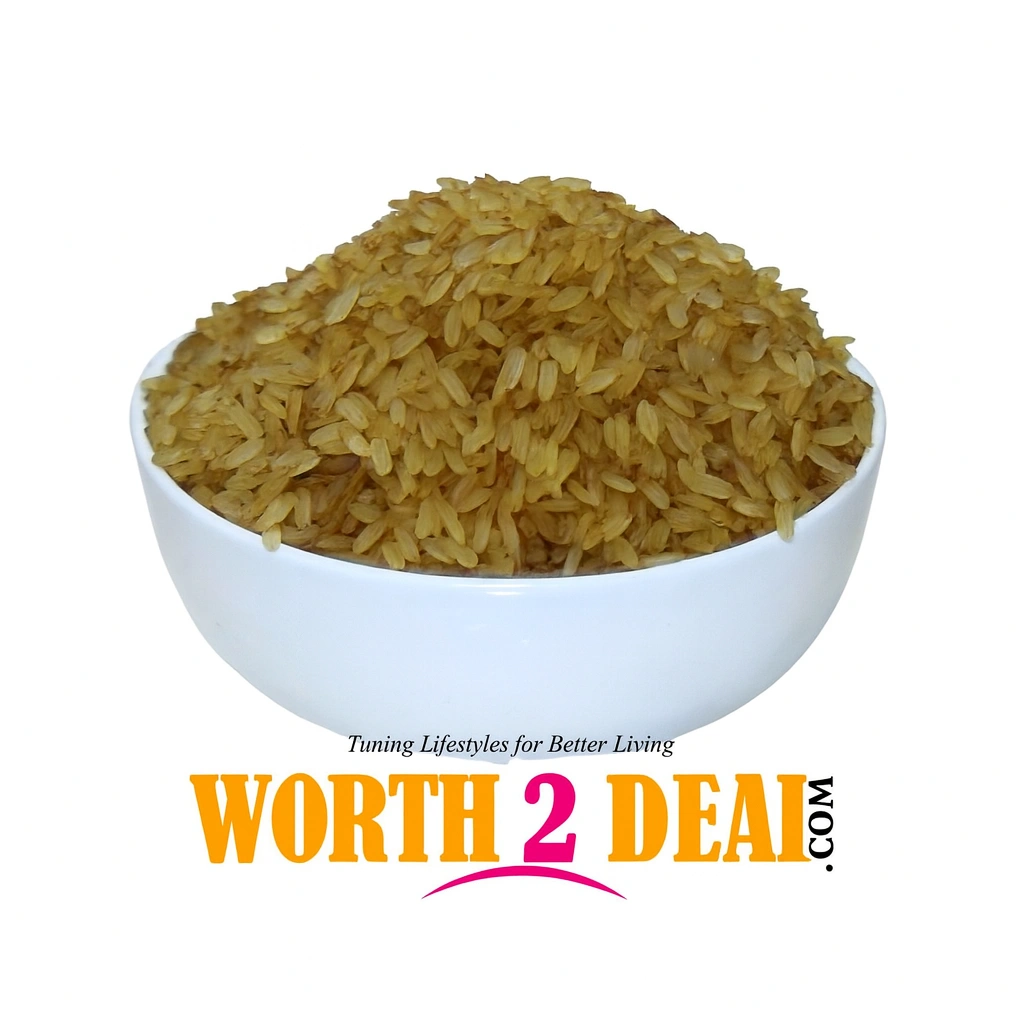
Vadi Matta rice — known as Palakkadan Long Matta, Rose Matta, and Kerala Red Rice — is the everyday staple of Malabar and Kerala households, sourced by Worth2Deal directly from Palakkad's GI-certified farms and packed in Malabar. Double boiled, natural bran retained, no artificial colour, no preservatives. Available in 1kg, 2kg, 5kg, and 10kg with free pan-India delivery. FSSAI Lic. No.: 21317233000044.
What Is Vadi Matta Rice
Vadi Matta rice is the elongated long-grain variety of GI-certified Palakkadan Matta — one of Kerala's most recognised indigenous rice varieties. "Vadi" refers to the grain's long, bold shape, distinguishing it from the shorter, rounder Unda Matta variety. The same black cotton soil and parboiling traditions that have defined Malabar's paddy culture for centuries produce the firm grain, earthy aroma, and deep reddish-brown colour that no other region of India can replicate — which is precisely why Palakkadan Matta holds Geographical Indication status from the Government of India.
Worth2Deal sources Long Matta directly from Palakkad farms — the only GI-certified growing region in India for this variety — and processes it in Malabar. No middlemen. No blending. What you receive is the same rice Malabar families have eaten daily for a thousand years.
Why Malabar Families Choose Vadi Matta Every Day
Palakkad district sits in northern Kerala, where the black cotton soil — regar soil — is derived from lime-rich volcanic rock found nowhere else in South India. This soil holds exceptional water retention capacity and concentrates flavour and mineral density into each grain in ways that cannot be reproduced in other growing conditions. Neighbouring states have attempted to grow Matta rice, but the result is never the same — the GI certification exists precisely to protect this difference.
The traditional double-boiling process drives B vitamins from the outer husk deep into the grain before the husk is removed. Single-milled rice loses these vitamins in processing. Worth2Deal's Long Matta retains them — along with the natural bran layer that carries fibre, magnesium, and the anthocyanin antioxidants responsible for its distinctive reddish-brown colour.
This is not a health food trend. This is simply how Malabar families have cooked rice since before recorded history — and why Vadi Matta is the rice ordered by Malayali diaspora families in Bengaluru, Mumbai, Chennai, Hyderabad, Delhi, Pune, Kochi, Kozhikode, Thrissur, Palakkad, Kannur, Kottayam, Ernakulam, Kolkata, Ahmedabad, Surat, Jaipur, Nagpur, Lucknow, and Bhopal who want nothing to change between their home table and their current kitchen, wherever in India they live.
Is Vadi Matta Rice Good for Diabetics
Vadi Matta rice has a naturally lower glycaemic index than white polished rice. The retained bran slows the breakdown of starch during digestion, meaning blood glucose rises more gradually and steadily after eating Long Matta than after eating white rice. The dietary fibre, magnesium, and anthocyanins in the bran layer each contribute independently to blood sugar stability and insulin sensitivity.
Magnesium deficiency is directly linked to insulin resistance in clinical research — and Vadi Matta's bran-retained processing preserves the magnesium that polished rice removes entirely. This makes Worth2Deal Palakkadan Long Matta a genuinely practical everyday substitution for people managing diabetes or monitoring blood sugar — not as a medicine, but as a meaningfully better carbohydrate choice.
Pair Long Matta with protein-rich curries — fish curry, lentil dal, eggs — to further slow glucose absorption and create balanced, satisfying meals.
Important: Vadi Matta rice is a carbohydrate food. People with diabetes should manage portion sizes and consult a healthcare provider for personalised dietary guidance.
Vadi Matta vs Unda Matta — What Is the Difference
| Vadi Matta (Long Matta) | Unda Matta | |
|---|---|---|
| Grain shape | Long, elongated | Short, round |
| Cooked texture | Firm, separate | Softer, slightly sticky |
| Best for | Daily curries, lunch boxes, kanji | Onam Sadya, payasam, soft kanji |
| Flavour | Bolder, earthier | Milder, softer |
| GI origin | Palakkad, Kerala | Palakkad, Kerala |
Both are GI-certified Palakkadan varieties from the same Palakkad farms. Both are available from Worth2Deal — see our Palakkadan Unda Matta Rice for the round-grain variety, and our Organic Vadi Matta Rice for our highest-fibre certified organic option. For a deeper guide on Kerala rice varieties and cooking traditions, read our blog at Paithrka — Kerala Food Traditions.
Nutritional Advantages of Natural Bran Retained Vadi Matta
Dietary Fibre:
The retained bran provides dietary fibre completely absent in polished white rice. Fibre slows digestion, supports bowel regularity, reduces cholesterol absorption, and nourishes beneficial gut bacteria.
Lower Glycaemic Index:
Blood glucose rises more slowly and steadily compared to white rice — practical for diabetics and anyone managing blood sugar.
B Vitamins (Thiamine B1, Riboflavin B2, Niacin B3):
Traditional double-boiling drives B vitamins from the husk into the grain before milling. Polished white rice loses these entirely.
Magnesium:
Retained in the bran layer. Supports heart function, blood pressure regulation, bone health, and insulin sensitivity.
Anthocyanins:
The reddish-brown colour comes from anthocyanins — natural antioxidant pigments with anti-inflammatory properties. No artificial colour added.
Gluten Free:
Naturally gluten-free — suitable for coeliac and gluten-intolerant individuals.
How to Cook Vadi Matta Rice — Pressure Cooker, Open Pot, and Kanji
Rinse 4–5 times until water runs clear. Soak for minimum 30 minutes (up to 2 hours).
Pressure Cooker:
1 cup rice : 3.5 cups water. Medium flame, 5–6 whistles. Natural pressure release — do not open early. Drain excess water.
Open Pot (Traditional Malabar Method):
1 cup rice : 8 cups water. Bring to full boil. Add soaked rice. Medium flame, 25–30 minutes, stirring occasionally. Drain through colander when a grain pressed between fingers mashes with slight resistance.
Kerala Kanji (Rice Porridge):
1 cup rice : 10–12 cups water. Low flame, 35–40 minutes without draining. Salt to taste. Serve warm with small onions, green chillies, and pickle.
Electric Cooker:
1 cup rice : 3 cups water. Standard white rice setting. Rest 10 minutes before opening.
The kanji vellam — starchy cooking water — is itself a traditional Malabar wellness drink, consumed warm as a digestive, or applied to hair for natural shine. Nothing is wasted in the traditional Kerala kitchen.
Storage
Store in a cool, dry, airtight container away from sunlight and moisture. Add 2–3 dried cloves or a bay leaf to naturally prevent infestation during long storage — the traditional Malabar household method. Best consumed within 6–8 months of purchase. Do not store near strong-smelling items.
Product Details
Net Weight: 1kg | 2kg | 5kg | 10kg Variety: Palakkadan Long Matta Rice — GI Certified — Vadi Matta Grain Shape: Elongated long grain Processing: Double boiled — traditional parboiling Milling: Natural bran retained Colour: Deep reddish-brown — natural, no artificial colour Glycaemic Index: Lower than white rice Cultivation: Conventional — Palakkad farms, Kerala Gluten Free: Yes Preservatives: None Shelf Life: 12 months (unopened, stored correctly) Sourced from: Palakkad farms, Kerala Packed by: Worth2Deal, 7/330 Shanthi Nagar, Valayamkulam, Kokkur Post, Malappuram District, Kerala — 679591 FSSAI Licence No.: 21317233000044 Phone: +91 9846294242 | +91 7907168550 Email: worth2deal.com@gmail.com
FAQ
1. What is Vadi Matta rice?
Vadi Matta rice is the long-grain variety of GI-certified Palakkadan Matta — the indigenous red rice of Malabar and Kerala, sourced from Palakkad's black cotton soil. "Vadi" refers to the elongated grain shape. Worth2Deal Palakkadan Long Matta is double boiled using traditional parboiling, natural bran retained, with a bold earthy flavour, firm separate grains, and a naturally lower glycaemic index than white rice. FSSAI Lic. No.: 21317233000044.
2. Is Vadi Matta rice good for diabetics?
Yes. Vadi Matta rice has a naturally lower glycaemic index than white rice — blood glucose rises more slowly after eating it. The retained bran provides dietary fibre and magnesium that support blood sugar stability. Worth2Deal Long Matta is suitable as an everyday rice substitution for people managing diabetes, though portion sizes should be managed and a healthcare provider consulted for personalised guidance.
3. Is Vadi Matta rice healthy for daily consumption?
Yes. Worth2Deal Palakkadan Long Matta provides dietary fibre, B vitamins, magnesium, calcium, and anthocyanin antioxidants — all absent or reduced in polished white rice. The traditional double-boiling process retains nutrients that single-stage milling destroys. It is the everyday rice of Malabar households — eaten not as a health supplement but as the natural, unprocessed whole grain it has always been.
4. What is the difference between Vadi Matta and Unda Matta?
Vadi Matta has a long, elongated grain — firm cooked texture, bold earthy flavour, ideal for daily curries, lunch boxes, and meals requiring the rice to hold shape. Unda Matta has a shorter, rounder grain — softer cooked texture, preferred for Onam Sadya, payasam, and softer kanji. Both are GI-certified Palakkadan varieties. Worth2Deal stocks both — see our Palakkadan Unda Matta Rice.
5. Which brand of Vadi Matta rice is best?
Worth2Deal sources Palakkadan Long Matta directly from Palakkad farms with no middlemen — GI-certified origin, no blending with other rice varieties, hygienically cleaned and sorted in Malabar. The difference between Worth2Deal and supermarket shelf brands is traceability: our rice goes from Palakkad farms to your door, packed and FSSAI-verified (Lic. No.: 21317233000044) with full ingredient transparency.
6. How do I cook Vadi Matta rice in a pressure cooker without it being hard?
Soak for minimum 30 minutes before cooking. Use 1 cup rice : 3.5 cups water. Cook on medium flame for 5–6 whistles. Allow pressure to release naturally — forced release leaves the grain undercooked. The grain will be soft with a slight chew, not mushy. If still firm after 6 whistles, add a quarter cup water and cook 1–2 more whistles.
7. Do I need to soak Vadi Matta rice before cooking?
Yes — soaking is essential for Vadi Matta. The natural bran retained on the grain means it takes longer to hydrate than polished rice. Minimum 30 minutes of soaking reduces cooking time, ensures even cooking, and prevents the outer bran from cooking faster than the inner grain. For kanji, soak for up to 2 hours for the smoothest result.
8. Is Matta rice the same as brown rice?
No. Brown rice is any rice variety milled to retain the bran layer. Matta rice is specifically Palakkadan Matta — a distinct indigenous variety grown only in Palakkad's black cotton soil. The flavour, texture, and grain character of Vadi Matta are completely different from generic brown rice. Matta rice is also parboiled using traditional double-boiling — a processing step brown rice does not undergo — which drives additional nutrients deep into the grain.
9. Why is Vadi Matta rice red?
The reddish-brown colour comes from anthocyanins in the natural bran layer retained during milling. Anthocyanins are natural antioxidant pigments — the same class found in blueberries. No artificial colour is added. Worth2Deal Palakkadan Long Matta is 100% natural colour — if you soak the grain in water and significant colour bleeds out, that indicates artificial dye. Natural Matta releases only a very light tint.
10. Can I use Vadi Matta rice for biryani or fried rice?
Yes, with adjustments. The firm, separate grain of Long Matta actually holds biryani structure well. Reduce water slightly (1 cup rice : 3 cups water) and cook until 80% done before layering in the dum pot. For fried rice, use day-old cooked Long Matta — the firm grain separates well in the wok without clumping.
11. Where can I buy authentic Vadi Matta rice online in India?
Worth2Deal at worth2deal.com delivers authentic Malabar Palakkadan Long Matta directly from source — free pan-India shipping in 1kg, 2kg, 5kg, and 10kg packs. We deliver to Chennai, Bengaluru, Mumbai, Hyderabad, Delhi, Pune, Kochi, Thrissur, Kozhikode, Palakkad, Kolkata, Ahmedabad, Surat, Jaipur, Nagpur, Lucknow, Bhopal, Visakhapatnam, Coimbatore, and all major Indian cities and towns.
12. How does Vadi Matta compare to Jaya rice for daily cooking?
Vadi Matta has a bolder, earthier flavour and firmer grain — preferred for strong Kerala curries and Malabar home cooking. Jaya rice is softer, more neutral, and quicker to cook. Vadi Matta's retained bran gives it a meaningful nutritional advantage — more fibre, lower GI, B vitamins, and magnesium. Jaya is the everyday convenience rice; Long Matta is the everyday nourishment rice.
Worth2Deal Palakkadan Long Matta Rice is sourced directly from Palakkad farms — GI-certified, double boiled using traditional Malabar parboiling methods, natural bran retained, and packed in Malabar with no middlemen. This is the bold, firm, earthy red rice that has fed Malabar and Kerala families for a thousand years — and still belongs at the centre of every proper Kerala meal. FSSAI Lic. No.: 21317233000044. Order now — 1kg, 2kg, 5kg, or 10kg — delivered free anywhere in India.