

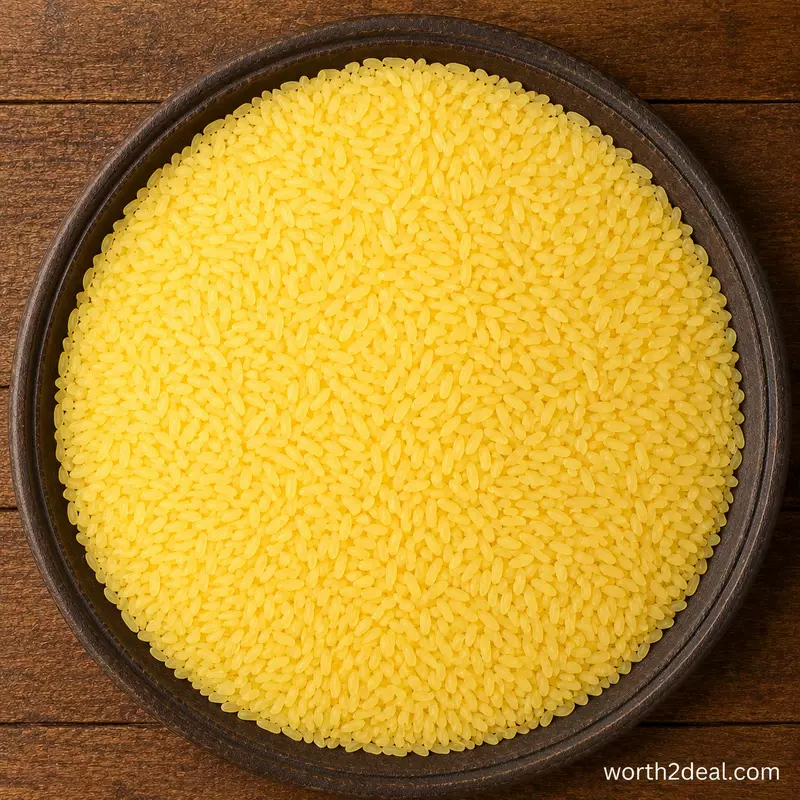


Buy Authentic Bodhana Rice Online — Kerala Noorjahan Converted Rice, Soft Texture, Aromatic, Parboiled, 1kg to 10kg
Available Offer
Share :
Worth2Deal Bodhana Rice is Kerala's trusted Noorjahan converted rice — soft, aromatic, and perfectly parboiled. Sourced from Malabar's paddy-growing regions, processed using traditional steam-pressure conversion, and packed with care in Malabar without artificial additives. Available in 1kg, 2kg, 5kg, and 10kg. Free pan-India delivery. FSSAI Lic. No.: 21317233000044.
What Is Bodhana Rice — Noorjahan Converted Rice Explained
Bodhana rice is a popular Kerala parboiled rice variety sold under the Noorjahan brand. The word "converted" in its name tells you something important about how it is processed — and why it is better than ordinary white rice.
Here is how it works. Before the outer layers are removed, the raw paddy is soaked in water and then treated with steam under pressure. This process is called conversion or parboiling. The steam forces the nutrients that live in the outer bran layers deep into the inner grain. Then, when the husk and bran are milled away, the grain keeps most of those nutrients instead of losing them. Think of it like squeezing juice into a sponge before you wash the outside of the sponge — the goodness stays inside.
The result is a rice grain that looks like white rice, cooks like white rice, but is meaningfully more nutritious than ordinary white rice — and far easier to cook because the conversion process makes each grain firm and separate. Bodhana Noorjahan converted rice will never turn mushy. It stays fluffy, grain by grain, every time.
In Kerala, especially across Malabar, Bodhana rice is the everyday household rice — the rice that goes into morning Kanji, evening meals, Puttu on weekends, and Idiyappam for breakfast. Malayali families across India who grew up eating Bodhana rice know exactly what makes it special: the mild aroma, the clean white grain, the soft but firm cooked texture, and the way it works perfectly in every Kerala dish.
Why Bodhana Converted Rice Is Better Than Regular White Rice
Most people think all white rice is the same. It is not.
Regular milled white rice is simply paddy with the husk and bran stripped off. Everything that was nutritious — the B vitamins, the minerals, the fibre — goes away with the bran. What is left is mostly starch.
Bodhana Noorjahan converted rice goes through the steam-pressure conversion step first. This step moves the nutrients from the bran into the grain before milling. So when the bran is removed, the good stuff stays behind.
| What You Get | Bodhana Converted Rice | Ordinary White Rice |
|---|---|---|
| B Vitamins (B1, B2, B3, B6) | Retained via conversion | Lost during milling |
| Minerals (Magnesium, Zinc, Phosphorus) | Partially retained | Largely removed |
| Grain texture when cooked | Firm, separate, fluffy | Can become sticky or mushy |
| Glycaemic Index | Lower than regular white rice | Higher |
| Cooking foolproofness | Difficult to overcook | Easy to turn mushy |
| Aroma | Mild, clean, pleasant | Neutral |
The conversion process also gelatinises the starch slightly — meaning the grain holds its shape better during cooking, making Bodhana rice ideal for Biryani, Kanji, Puttu, and Idiyappam where texture matters.
How to Cook Bodhana Noorjahan Rice — Perfect Every Time
Bodhana converted rice is one of the easiest rices to cook because the conversion process makes the grain firm and forgiving. It does not turn mushy easily.
Pressure Cooker (Everyday Method) Rinse 1 cup of Bodhana rice 2–3 times. Add 2 cups of water. Cook on medium flame for 3–4 whistles. Allow pressure to release naturally. Open, fluff gently with a fork, and serve. The grains will be separate and soft — never sticky.
Open Pot (Traditional Malabar Method) Rinse rice. Add 1 cup rice to 4 cups boiling water. Cook on medium flame for 15–18 minutes, stirring occasionally. Test a grain — it should press flat easily but hold its shape. Drain excess water through a colander. This gives the cleanest, most traditional Malabar cooked rice texture.
Electric Rice Cooker 1 cup rice : 2 cups water. Standard white rice setting. Rest for 5 minutes after the cooker switches off before opening.
Kerala Kanji (Rice Porridge) 1 cup rice : 8–10 cups water. Low flame, 30–35 minutes without draining. Add salt to taste. Serve warm with small onions, green chillies, coconut chutney, or pickle. Bodhana rice makes a beautiful, slightly thick Kanji with a clean mild flavour that is not overpowering.
For Puttu Grind soaked Bodhana rice coarsely at home for traditional Puttu flour. Alternatively, use Bodhana rice flour from a mill. Layer with coconut in the puttu maker and steam for 8–10 minutes. The converted grain gives Puttu a light, crumbly, non-dense texture.
For Idiyappam Use finely ground Bodhana rice flour. Roast the flour lightly, add boiling salted water, knead into a soft dough, press through the Idiyappam mould onto steamer plates, and steam for 8–10 minutes. Bodhana rice's mild flavour and soft texture make it ideal for Idiyappam.
Water Ratio Quick Reference
| Cooking Method | Rice | Water |
|---|---|---|
| Pressure cooker | 1 cup | 2 cups |
| Open pot / drain method | 1 cup | 4 cups |
| Electric cooker | 1 cup | 2 cups |
| Kanji | 1 cup | 8–10 cups |
Is Bodhana Noorjahan Rice Healthy
Yes — and the reason is the conversion process itself.
Because steam-pressure conversion drives nutrients from the bran into the grain before milling, Bodhana converted rice retains more B vitamins, magnesium, phosphorus, and zinc than ordinary white rice. These are nutrients that regular white rice loses entirely when the bran is removed.
B Vitamins — Thiamine, Riboflavin, Niacin, B6:
These support brain function, energy metabolism, nerve health, and cell repair. Converted rice retains them. Ordinary white rice does not.
Magnesium:
Supports heart function, blood pressure regulation, bone health, and sleep quality. Removed in ordinary white rice. Partially retained in converted rice.
Zinc and Phosphorus:
Support immune function, wound healing, and bone strength. Again, retained better in converted rice than in ordinary white rice.
Lower Glycaemic Index:
The gelatinisation of starch during the conversion process means the body digests Bodhana rice slightly more slowly than regular white rice. Blood sugar rises more gradually — relevant for people managing blood sugar or eating mindfully.
Gluten Free:
Bodhana Noorjahan converted rice is 100% naturally gluten free. Safe for coeliac and gluten-intolerant individuals.
Easy to Digest:
The soft, fully cooked grain texture of converted rice is gentle on the digestive system — suitable for children, elderly family members, and anyone recovering from illness.
Bodhana Rice in Malabar — The Rice Every Family Knows
Walk into any provisions store in Kozhikode, Malappuram, Palakkad, Thrissur, or Kannur and you will find Noorjahan Bodhana rice on the shelf. It is not a specialty product in Malabar — it is the everyday rice. The rice that grandmother scoops into the pressure cooker every morning. The rice that becomes Kanji when someone is unwell. The rice that is ground into flour for weekend Puttu and Idiyappam.
For Malayali families who have moved to Bengaluru, Mumbai, Chennai, Hyderabad, Delhi, Pune, Kochi, Kolkata, Ahmedabad, Surat, Jaipur, Nagpur, Lucknow, Bhopal, Visakhapatnam, Coimbatore, Ernakulam, Thrissur, Kottayam, Kannur, Kozhikode, and every other corner of India — Bodhana rice from Worth2Deal brings Malabar's kitchen straight to your door.
The aroma when you open the bag. The way the grains separate perfectly after cooking. The Kanji that tastes exactly right. These are not things you can replace with a generic supermarket rice. Worth2Deal packs and ships the genuine Noorjahan converted Bodhana rice — the same quality that Malabar households have trusted for decades.
Bodhana Rice vs Other Kerala Rice Varieties — Which Should You Use
| Bodhana Rice (Noorjahan) | Vadi Matta Rice | Unda Matta Rice | Jaya Rice | |
|---|---|---|---|---|
| Colour | White | Deep reddish-brown | Reddish-brown | White |
| Grain | Medium, separate | Long, firm | Short, round | Medium, soft |
| Texture when cooked | Soft, fluffy, separate | Firm, chewy | Soft, slightly sticky | Soft, neutral |
| Best for | Kanji, Puttu, Idiyappam, daily rice | Strong curries, daily meals | Onam Sadya, payasam | Daily soft rice |
| Fibre | Moderate (converted) | High (bran retained) | High (bran retained) | Low |
| Flavour | Mild, clean, aromatic | Bold, earthy | Mild, earthy | Neutral |
| GI | Lower than white rice | Low | Low | Moderate |
Worth2Deal stocks all major Kerala rice varieties. See our full rice range — including Palakkadan Vadi Matta Rice, Palakkadan Unda Matta Rice, and Organic Vadi Matta Brown Rice. For a complete guide to Kerala rice varieties and how to choose the right one for each dish, visit Paithrka — Kerala's Ancestral Kitchen.
Storage
Store in a cool, dry, airtight container away from sunlight and moisture. Keep away from strong-smelling foods. Add 2–3 dried bay leaves or cloves to the storage container to naturally prevent infestation — the traditional Malabar household method. Best consumed within 12 months of packing. Refrigeration is not necessary but extends freshness in humid climates.
Product Details
| Product Name | Bodhana Rice — Noorjahan Converted Rice |
| Also Known As | Noorjahan Boiled Rice, Kerala Converted Rice, Noorjahan Parboiled Rice |
| Type | Converted (parboiled) rice — white grain |
| Texture | Soft, fluffy, non-sticky, separate grains |
| Aroma | Mild, clean, naturally aromatic |
| Processing | Steam-pressure conversion before milling |
| Sizes Available | 1kg · 2kg · 5kg · 10kg |
| SKU | W2D-BDR-001 · W2D-BDR-002 · W2D-BDR-005 · W2D-BDR-010 |
| Gluten Free | Yes |
| Preservatives | None |
| Artificial Colour | None |
| Shelf Life | 12 months from packing (stored correctly) |
| Best For | Kanji, Puttu, Idiyappam, daily rice, Payasam |
| Packed by | Worth2Deal, 7/330 A, Shanthi Nagar, Kokkur, Malappuram, Kerala — 679591 |
| FSSAI Lic. No. | 21317233000044 |
| Phone | +91 98462 94242 · WhatsApp +91 79071 68550 |
worth2deal@gmail.com |
FAQ
1. What is Bodhana rice?
Bodhana rice is a popular Kerala parboiled rice variety — also known as Noorjahan converted rice. It gets its name from the Noorjahan brand widely trusted across Malabar. "Converted" means the raw paddy undergoes steam-pressure treatment before milling, which drives nutrients from the outer bran into the inner grain. The result is white rice that looks and cooks like ordinary rice but retains more B vitamins, minerals, and has a naturally lower glycaemic index than regular milled white rice. FSSAI Lic. No.: 21317233000044.
2. What is the difference between converted rice and parboiled rice?
They are essentially the same process — parboiling IS the conversion process. "Converted rice" is the common commercial term used in India (especially Kerala and South India) for rice that has been soaked, steam-treated, and then milled. The steam-pressure step "converts" the nutrient-carrying compounds from the bran into the endosperm (inner grain) before the bran is removed. Bodhana Noorjahan rice is both parboiled and converted — these two terms describe the same product.
3. Is Bodhana Noorjahan rice healthy?
Yes. The conversion process retains B vitamins (B1, B2, B3, B6), magnesium, zinc, and phosphorus inside the grain — nutrients completely lost in ordinary white rice. Converted rice also has a lower glycaemic index than regular white rice, meaning blood sugar rises more gradually after eating it. Bodhana rice is 100% gluten free, contains no preservatives, no artificial colour, and is easy to digest — suitable for children, elderly family members, and everyday consumption for all age groups.
4. Is Bodhana Noorjahan converted rice good for diabetics?
Bodhana converted rice has a lower glycaemic index than regular white rice — blood sugar rises more gradually after eating it compared to ordinary milled white rice. However, it is still a carbohydrate food and not suitable as an unlimited food for diabetics. In controlled portions, it is a better rice choice than ordinary white rice for people managing blood sugar. Always consult your doctor or dietitian for personalised dietary guidance.
5. How do I cook Bodhana Noorjahan converted rice perfectly?
Rinse 2–3 times. Pressure cooker: 1 cup rice : 2 cups water, medium flame, 3–4 whistles, natural pressure release. Open pot: 1 cup rice : 4 cups boiling water, 15–18 minutes, drain. Electric cooker: 1 cup rice : 2 cups water, standard setting. Bodhana converted rice is very forgiving — the conversion process makes grains firm and separate, so it is difficult to overcook.
6. Why does converted rice take longer to cook than regular rice?
The steam-pressure conversion process makes the starch inside each grain denser and more compact. This slightly harder grain takes a little more heat and time to fully soften compared to ordinary raw milled rice. This is actually a good thing — it means the grain holds its shape and does not turn mushy or sticky, giving you perfectly fluffy, separate grains every time.
7. Is Bodhana rice good for making Kanji?
Yes — Bodhana Noorjahan rice makes excellent Kerala Kanji. Use 1 cup rice to 8–10 cups water, cook on low flame for 30–35 minutes without draining. The result is a smooth, mildly flavoured porridge with a clean taste. The converted grain gives Kanji a pleasant, slightly thick consistency without becoming gluey. Serve warm with small onions, green chillies, papad, or pickle — the traditional Malabar way.
8. Can I use Bodhana rice for Puttu?
Yes. Bodhana rice is traditionally used to make Puttu flour in Malabar homes. Soak the rice for 4–6 hours, drain, dry slightly, and grind coarsely at a local mill. Mix the flour with water until it just holds shape when pressed, layer with grated coconut in a puttu maker, and steam for 8–10 minutes. The mild flavour and firm-yet-soft texture of Bodhana converted rice gives Puttu a light, crumbly texture — not dense or heavy.
9. Is Bodhana Noorjahan rice the same as Bodhana parboiled rice?
Yes — they are the same product. "Converted rice" and "parboiled rice" describe the same steam-pressure processing method. Noorjahan Bodhana rice is parboiled before milling, which is why it is also called "boiled rice" (ബോധന) in local Kerala grocery stores. Different sellers may label it as boiled, parboiled, or converted — all refer to the same product and the same processing method.
10. What is the price of Noorjahan Bodhana rice?
Worth2Deal Bodhana Noorjahan converted rice is available in 1kg, 2kg, 5kg, and 10kg packs at worth2deal.com with free pan-India delivery. Retail prices in Kerala for Noorjahan rice typically range from ₹35–₹50 per kg depending on pack size and location. Buying in larger packs (5kg or 10kg) from Worth2Deal is more economical per kilogram and includes free shipping to every Indian city and town.
11. Is Bodhana rice gluten free?
Yes — Bodhana Noorjahan converted rice is 100% naturally gluten free. Rice does not contain gluten. Worth2Deal Bodhana rice contains no additives, no wheat-based ingredients, and no cross-contamination risk from other grains in the packing facility. It is safe for people with coeliac disease and gluten intolerance.
12. What is Noorjahan rice — is it a brand or a variety?
Noorjahan is a brand name that has become the common market name for Bodhana converted rice in Kerala, much the way "Horlicks" became a word for malt drinks. Bodhana is the variety name — a parboiled white rice grown and processed in Kerala. Worth2Deal's Bodhana rice uses the authentic Noorjahan converted processing standard — soft grain, mild aroma, firm cooked texture.
13. Where can I buy Bodhana Noorjahan rice online in India?
Worth2Deal at worth2deal.com delivers authentic Kerala Bodhana Noorjahan converted rice in 1kg, 2kg, 5kg, and 10kg packs — free pan-India delivery with no minimum order. We deliver to Bengaluru, Mumbai, Chennai, Hyderabad, Delhi, Pune, Kochi, Kozhikode, Thrissur, Palakkad, Kannur, Kottayam, Ernakulam, Kolkata, Ahmedabad, Surat, Jaipur, Nagpur, Lucknow, Bhopal, Visakhapatnam, Coimbatore, and all major Indian cities. FSSAI Lic. No.: 21317233000044.
14. Which is better — Bodhana rice or Basmati rice?
They serve completely different purposes. Basmati is a long-grain aromatic variety best for Biryani, Pulao, and dishes where a distinctive floral fragrance is wanted. Bodhana Noorjahan is a soft, mild, converted rice best for everyday Kerala meals — Kanji, Puttu, Idiyappam, daily rice with curries. In terms of nutrients, converted rice retains more B vitamins and minerals than polished Basmati. In terms of flavour, Bodhana is mild and clean; Basmati is intensely aromatic. Choose based on the dish, not prestige.
15. Which size should I buy — 1kg, 2kg, 5kg, or 10kg?
For families of 2–3 people: 2kg is a practical monthly supply. For families of 4–6 using Bodhana as their daily rice: 5kg lasts about 3–4 weeks. For large families or households where Bodhana is the primary rice: 10kg gives the best value per kg and the fewest reorders. All sizes ship free from Worth2Deal. The 1kg pack is ideal for first-time buyers who want to try before buying in bulk.
Worth2Deal Bodhana Rice is authentic Kerala Noorjahan converted rice — sourced from Malabar's paddy regions, steam-pressure parboiled, soft, aromatic, and perfectly grained. The everyday rice of Malabar kitchens, now delivered free to every corner of India. Whether you are making morning Kanji, weekend Puttu, or a simple rice-and-curry lunch — this is the rice your kitchen needs. Available in 1kg, 2kg, 5kg, and 10kg. FSSAI Lic. No.: 21317233000044. Order now.